
Thoughts
The Hebrew phrase used to describe Yoseph’s robe is ketonet passim (כְּתֹנֶת פַּסִּים). Ketonet means robe or tunic (a common word for clothing). Passim is less clear and has been translated in different ways. Some think it means colorful or ornate, while others think it means long, like down to the hands or feet. This is why English Bibles say things like “coat of many colors,” “long robe,” or “ornate robe.”
Similar to Joseph’s second dream – Revelation 12:1 A great sign appeared in heaven: a woman clothed with the sun, with the moon under her feet and a crown of twelve stars on her head.
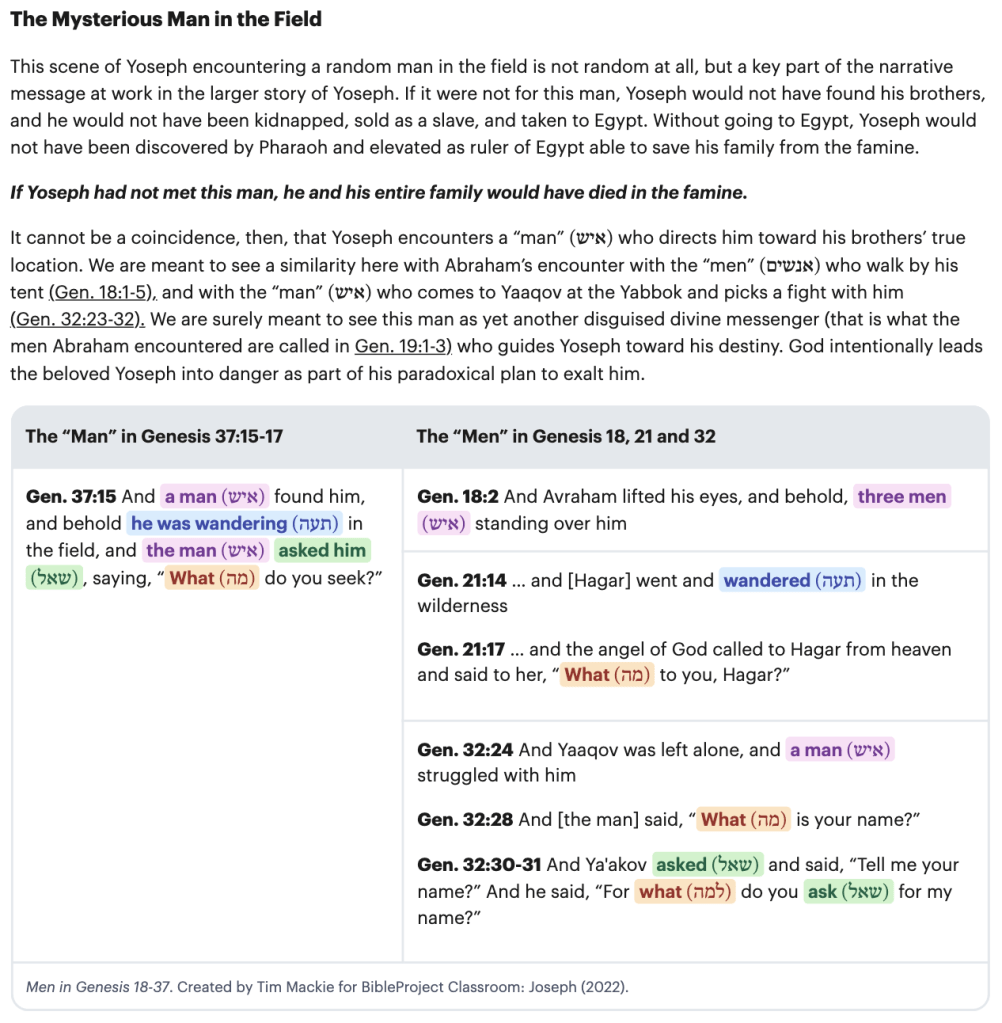
A man found Joseph wandering – the bible project does a whole session on what seems like a quick verse to read https://bibleproject.com/classroom/joseph/sessions/6 (see image below)
Joseph was sold for 20 shekels – a few months wages – also seen in Leviticus 27:5 (ESV): “If the person is from five years old up to twenty years old, your valuation shall be twenty shekels for a male and ten shekels for a female.”
Judah takes a wife from Canaan which his ancestors have been told not to do, and then has a son so wicked God Himself kills him.
On Onan spilling his seed: This passage is sometimes misread as a condemnation of all sexual acts outside procreation (e.g., masturbation or contraception) (In fast masturbation is called onanism!). Onan’s sin was his intentional refusal to fulfill a sacred duty, but still engage in sexual intercourse.
Lot’s daughters and Tamar use deception to sleep with their father (in-law). Lot’s daughter has Moab (line of Ruth) and Tamar has twins of whom Perez is the twin who carries the line of Jesus (through Boaz).
I didn’t know what the end of this verse meant “So he left all that he had in Joseph’s charge, and because of him he had no concern about anything but the food he ate.” so I looked it up and its a Hebrew idiom that means Potiphar entrusted everything to Joseph and didn’t concern himself with anything.
The Hebrew term for Potiphar is סְרִיס פַּרְעֹה (saris Par‘oh) where saris could mean eunuch and some people say this is why is wife was ‘sexually frustrated’ (…or she could just be human).
A big temptation for Joseph who was most likely a virgin, having a high ranking woman asking him daily for sex, and would easily be done in secret (and this happened for months or even YEARS)
Joseph should have been put to death but perhaps Potiphar secretly knew the truth.
Genesis 39 mentions the Lord was with Joseph 5 times (verses 2, 3, 5, 21, 23)
We see deceptive garments in these three chapters – using Joseph’s coat to deceive Jacob, using a veil to hide Tamar, and Potiphar’s wife taking Joseph’s garment.
Questions
Was Joseph humble and truthful in telling on his brothers and bringing to them the dream or was he being a tattle tale and boastful? Seems like some commentaries say that Joseph shouldn’t have said anything about his dream.
Why were brothers pasturing near Shechem after the incident with Dinah? Power move?
I understand there was darkness and a veil but how do men in the Bible keep not recognizing people they have sex with (Jacob/Leah, Judah/Tamar)?
Did Joseph defend himself against Potiphar’s wife or did he stay silent (similar to Jesus being accused)?
Application
“And whatever he did, the Lord made it succeed” Is such a powerful phrase. I wonder if Joseph recognized God’s hand even when he was in the pit, sold into slavery, tempted, and thrown into prison. We get to see the full story unfold in Scripture, but in real time, it must have been hard to trust that God was still in control, although maybe Joseph had unshakable faith. Either way, this verse makes me reflect on my own trials and personal “prisons.” Am I stopping to notice how God is with me in them? Am I trusting that something good is happening or will come from it?

 Jo Reads The Bible
Leave a comment