
Thoughts
Numbers 10
Two Silver Trumpets
The priests (sons of Aaron) are to blow them. Used for:
- Assembling the people
- Breaking camp
- Signaling war
- Announcing festivals
| Trumpet Signal | # of Trumpets | Purpose | Who Responds | Verse |
|---|---|---|---|---|
| One long blast | One | Summon the leaders | Tribal leaders | Numbers 10:4 |
| One long blast | Two | Summon the entire community | All Israelites | Numbers 10:3 |
| Short blasts (alarm) | One | Signal east side tribes to break camp | Judah, Issachar, Zebulun | Numbers 10:5 |
| Short blasts (alarm) | Two | Signal south side tribes to break camp | Reuben, Simeon, Gad | Numbers 10:6 |
| Alarm during battle | Two | Call for God’s help and deliverance in war | Army of Israel | Numbers 10:9 |
| Blowing at festivals | Two | Mark feasts, new moons, and over offerings | Whole community in worship | Numbers 10:10 |
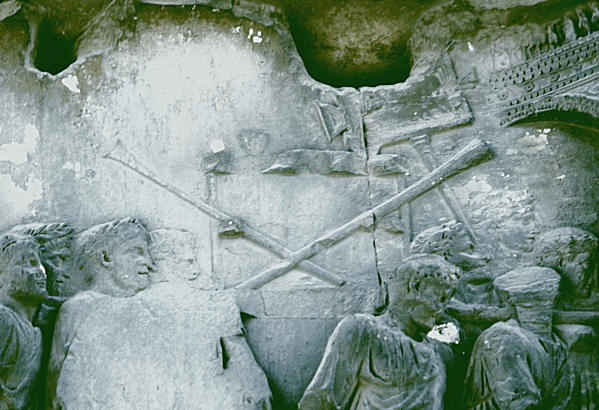
I have added a visual of trumpets from arch of Titus in Rome (taken by https://homepages.bluffton.edu/~sullivanm/titus/titus.html)
Leaving Sinai
The Israelites finally set out from Mount Sinai for the first time in the second year, second month, 20th day. They finally set out as a nation that is organized, purified, blessed.
| Order | Group | Tribes/Levites | Purpose/Role | Verses |
|---|---|---|---|---|
| 1st | East Camp | Judah, Issachar, Zebulun | Lead the procession | Numbers 10:14–16 |
| 2nd | Levites – Gershon & Merari | Levite clans | Carry Tabernacle structure and coverings | Numbers 10:17 |
| 3rd | South Camp | Reuben, Simeon, Gad | Second tribal division | Numbers 10:18–20 |
| 4th | Levites – Kohath | Levite clan | Carry holy objects (Ark, altar, etc.) | Numbers 10:21 |
| 5th | West Camp | Ephraim, Manasseh, Benjamin | Third tribal division | Numbers 10:22–24 |
| 6th | North Camp | Dan, Asher, Naphtali | Rear guard of the camp | Numbers 10:25–27 |
Moses invites Hobab, his Midianite brother-in-law, to journey with them. He declines, but Judges 1:16 and 4:11 mention Hobab’s descendants, the Kenites, living among the tribes of Judah and Naphtali. This strongly suggests that Hobab accepted Moses’ invitation and his family settled with the Israelites in the Promised Land.
The left and the Ark led the way – symbolizing God leading His people
- Each time they set out or stopped, Moses prays:
- “Rise up, Lord! Let Your enemies be scattered…”
- “Return, Lord, to the countless thousands of Israel.”
Numbers 11
Taberah (תַּבְעֵרָה) “Burning” due to God striking the outskirts with fire
Moses has a BREAKDOWN to God: Why have you dealt ill with your servant?…… Did I conceive all this people? Did I give them birth, that you should say to me, ‘Carry them in your bosom, as a nurse carries a nursing child,…….If you will treat me like this, kill me at once, if I find favor in your sight, that I may not see my wretchedness.”
God providing quail for them was not a blessing- sometime’s God gives us what we want/demand but it does not satiate us like God’s plan
Why does Moses question God after everything that happened – like why not take a pause and see what happens.
“Has the Lord’s arm been shortened?” made me laugh …not sure if it was supposed to be sarcastic to Moses.
This is the first time we see the Spirit coming onto a group of people at once.
The Hebrew word for prophesy is נִבָּא (nibba) and a prophet is called a נָבִיא (navi) (when the bet has a dot (dagesh) it sounds like “b” but without the dot it becomes vet “v”.
Eldad and Medad didn’t go up with the rest of the 70 but stayed in the camp, but the Spirit still fell on them
The wind from God brought quail from the sea
Kibroth-hattaavah קִבְרוֹת הַתַּאֲוָה means graves of craving
Numbers 12
“Moses was very humble, more than any man on earth.” (v. 3) Didn’t Moses write this
Miriam and Aaron speak against Moses because of his Cushite wife. But the real issue is jealousy: “Has the Lord spoken only through Moses? Hasn’t He also spoken through us?”
We aren’t sure if this is Zipporah or a second wife as she was not Cushite/Ethiopian but they also could be using it in a mean way
The word וַתְּדַבֵּר vatedabber mean’s “she spoke” which probably means Miriam led the complaint.
God is not happy and summons Moses, Aaron, and Miriam to the Tent of Meeting. Moses is unique among prophets and God speaks to him face to face, not in dreams or riddles.
the word for riddle is וְלֹא בְחִידֹת v’lo ve-chidot which could also mean ‘obscure sayings’. NKJV says “dark sayings”
Why did he use this intense phrase: “Let her not be as one dead, whose flesh is half eaten away when he comes out of his mother’s womb.”
After Miriam is restored, the camp moves to Paran.
Questions
Did they know the cloud would lift or was it a big surprise?
Was it wrong of the Israelites to complain about only eating one food for two years?
Was there nearby animals they could have hunted? What about their cows?
Why didn’t Eldad and Medad go up as commanded?
Application
We see SO MUCH in these three chapters. One main thing I see is the frustration of Moses crying out to God. I have had my own battles where it feels that I am shouting out to God begging for help. Moses was so tired and defeated he asked God to kill him. What I love, though, is that God doesn’t rebuke Moses for being overwhelmed. Instead, He responds with help. He shares the Spirit with others to lighten the load.
 Jo Reads The Bible
Leave a comment