
Thoughts
Numbers 19
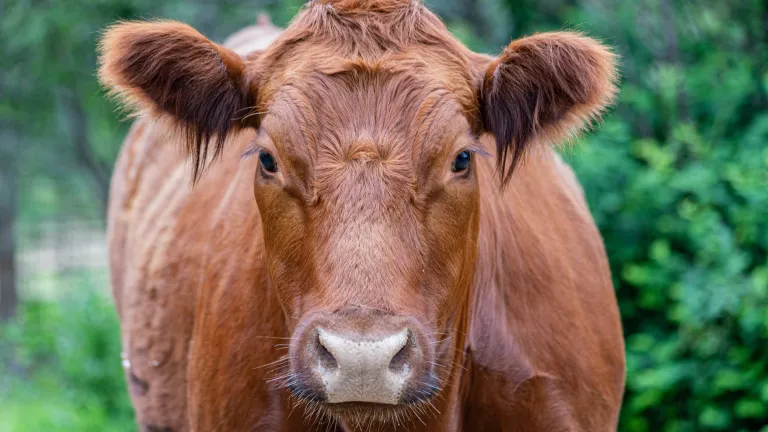
The Red Heifer ritual of purification from death-related impurity.
- God instructs Moses and Aaron to take a red heifer without defect, never yoked.
- The heifer is taken outside the camp and slaughtered by Eleazar the priest.
- Some of its blood is sprinkled seven times toward the Tabernacle.
- The entire animal is burned, along with cedarwood, hyssop, and scarlet yarn.
Afterwards a clean man collects the ashes and stores them outside the camp (used to make the water of purification). Those who handle the ashes or perform the ritual become unclean until evening.
If you come into contact with the dead
- Unclean for seven days.
- They must be purified on the third and seventh days with the water made from the ashes.
- Failure to purify results in being cut off from the community.
The Purification Process
- Ashes from the red heifer are mixed with fresh water in a vessel.
- A clean person uses hyssop to sprinkle the water on the unclean person, tent, and objects.
- The unclean person must be sprinkled on the third and seventh days, then wash and be clean.
If a person refuses to purify, they remain defiled and are cut off. The law is a perpetual statute for both Israelites and foreigners.
Numbers 20
Israel arrives in Kadesh (probably a different Kadesh from Numbers 13 or a broader portion of it)
This jumps to the end of the 40 years as Aaron dies and Numbers 33 says: “At the Lord’s command Aaron the priest went up Mount Hor, where he died on the first day of the fifth month of the fortieth year”
Moses is now 120
I do feel bad for Moses, and how frustrated he must be as a leader. I’m sure I also would have had a bit of a breakdown.
But also so surprised that he did not believe God (as God says in verse 12) after all he has seen and done.
Interesting use of “we” said by Moses instead of acknowledging God: “Hear now, you rebels: shall we bring water for you out of this rock?”
I always get these two events confused so here you go:
| Event | Exodus 17:1–7 | Numbers 20:1–13 |
|---|---|---|
| Location | Rephidim (in Sinai) | Kadesh (in the wilderness of Zin) |
| Time | Early in the wilderness journey (shortly after the Red Sea) | Near the end of the 40 years (just before entering the Promised Land) |
| Problem | The people have no water and quarrel with Moses | Again, the people have no water and quarrel with Moses |
| God’s Command | Strike the rock | Speak to the rock |
| Moses’ Action | Strikes the rock (as commanded) | Strikes the rock twice (in disobedience) |
| Outcome | Water flows, place named Massah and Meribah | Water flows, place named Meribah; Moses and Aaron are judged |
Edom meets Israel with hostility and they are forced to detour
Numbers 21
The beginning of this chapter takes place at Hormah (formerly Zephath) where we saw in Numbers 14 their attempt to enter the Promised Land
Verse 6 in Hebrew says הַשְּׂרָפִים (ha’serafim) which can mean fiery but is the same word (Seraphim) used in Isaiah 6 to describe fiery angelic beings which comes from saraf (to burn)
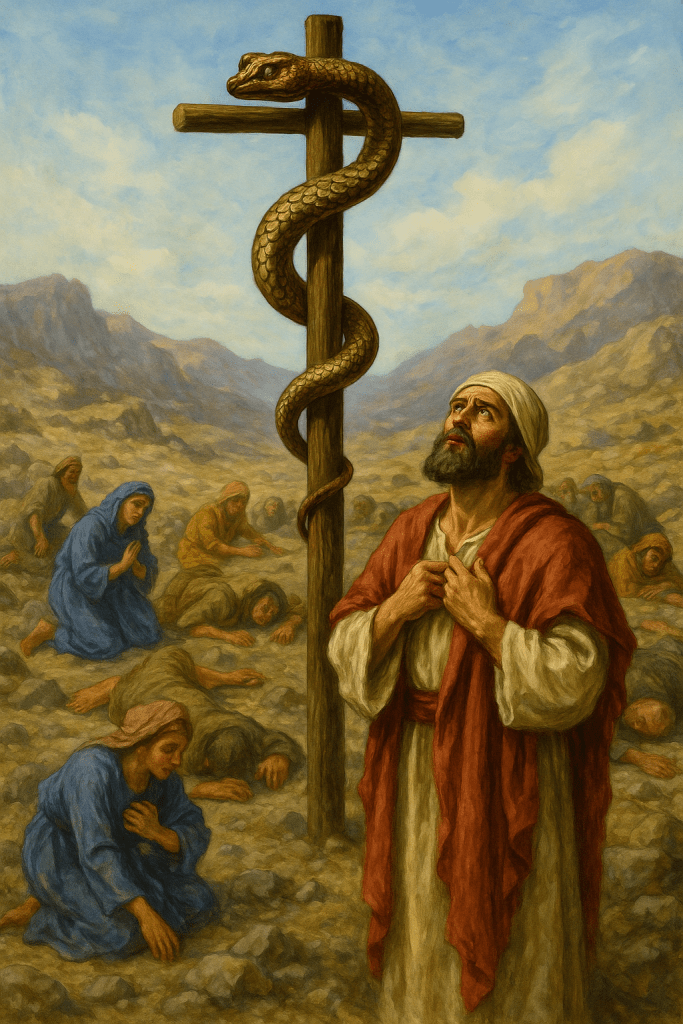
This event was spoken about by Jesus in John 3:14-15 and foreshadows Jesus on the cross. Both are lifted up, used as a remedy for sin, and just require a simple response.
Just like Edom, the Amorites would not let Israel pass on the King’s Highway.
Many ambulances feature a symbol of a snake wrapped around a staff, which comes from Greek mythology and represents the Rod of Asclepius (the god of healing). But it looks pretty similar to what Moses might have used!
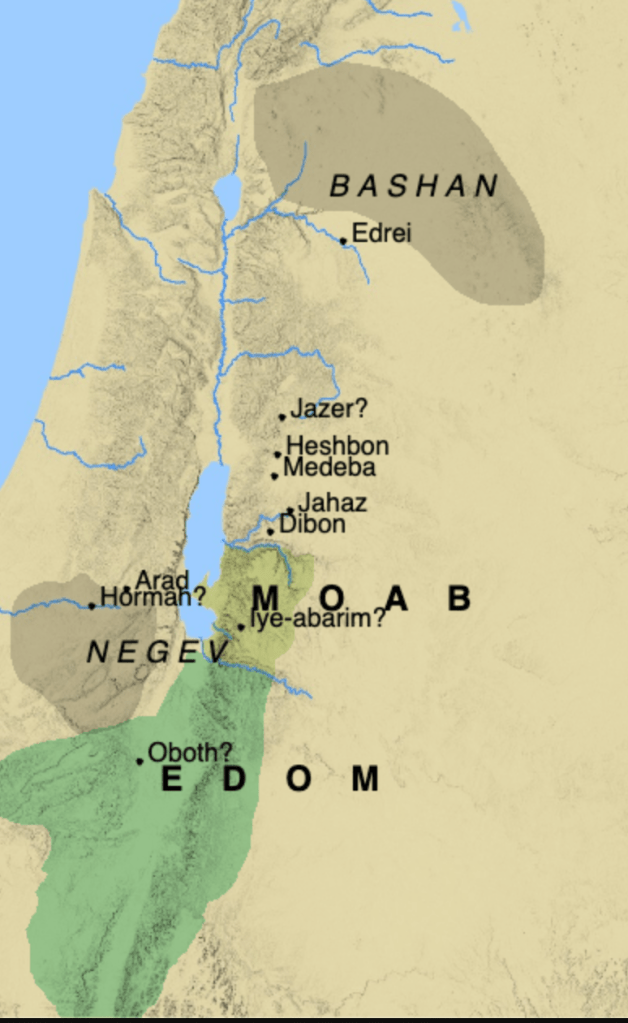
Below is possible map of locations from this chapter (from Bible Mapper)
Questions
Why did God allow water to come out of the rock if Moses disobeyed?
Why did God tell Moses to take his rod?
God already said that only Caleb and Joshua would see the chosen land – so wasn’t Moses already cut out before the Meribah incident?
What is the Book of the Wars of the Lord!
Application
Let’s see, we have a chapter on purity, on disobedience, and on grumbling. Through it all, we see so many of God’s attributes: His holiness, justice, and mercy. God clearly shows us how to live according to His will, but we often complain or outright disobey. The truth is, we can’t be pure on our own, only through His perfect gift, Jesus. Moses probably had no idea that the bronze serpent he lifted up would one day become a powerful symbol of God’s ultimate plan of salvation!

 Jo Reads The Bible
Leave a comment