
Thoughts
Samuel 2
Hannah’s Prayer
The first 10 verses are Hannah’s prayer to God.
She starts by exalting God: There is none holy like You; there is no Rock like our God.
With verses 3-8 we see this theme of ‘reversal’ also shown in Davidic psalms:
Hannah: “The bows of the mighty are broken, but the feeble bind on strength” (2:4).
David: “You save a humble people, but your eyes are on the haughty to bring them down” (2 Sam. 22:28; echoed in Ps. 18:27).
Other reversal mentions: God humbles the proud and exalts the lowly; He gives life, takes life, and controls wealth and poverty.
verse 9-10 shows God’s protection and Hannah’s confidence in His reign.
Eli and His Sons
The next portion starts with a contrast of Samuel ministering to the Lord at a young age vs Eli’s sons who were ‘worthless men’ The NKJV says “Now the sons of Eli were sons of Belial..” which is kind of confusing. The Hebrew says beliyya‘al (בְּלִיָּעַל) which means belî (בְּלִי) = “without” ya‘al (יָעַל) = “profit, worth, usefulness”. But later on, people started using the term ‘Belial’ as a name for wickedness (similar to how now we use the Hebrew word שָּׂטָן (satan) ‘adversary’ as Satan.
That’s why Paul in 2 Corinthians 6:15 uses it like a personal name: “What accord has Christ with Belial?”
AnYwAys… the sons (Hophni and Phinehas) do wicked things. They would abuse sacrificial offerings and engage in sexual immorality with the women at the Tabernacle
Contrasting this again, we see Samuel’s growth in favor with God and people. Hannah would make Samuel a little ephod each year! God blesses Hannah with more children after her dedication of Samuel.
Back to Eli’s sons, Eli tries to scold his sons. Eli’s rebuke is weak and they ignore him. Their fate is sealed.
God sends a man of God to pronounce judgment on the sons. Eli receives ondemnation for honoring his sons over God, thus Eli’s family line will lose the priesthood and face death
A faithful priest will be raised up instead this is foreshadowing Zadok in 1 Kings 2:27, where Solomon removes Abiathar (Eli’s line) and replaces him with Zadok.
So the priestly line goes:
Eli → Phinehas → Ahitub → Ahimelech → Abiathar.
And of course points to the Perfect Priest Jesus.
Hophni and Phinehas will die on the same day.
Samuel 3
Samuel serves the Lord under Eli at Shiloh. It says that God’s word and visions are rare in those days.
Samuel is lying near the ark of God and hears a voice calling his name and assumes it is Eli. He runs to Eli, who tells him to go back to bed.
This happens three times before Eli realizes it is the Lord calling the boy.Eli instructs Samuel to answer, “Speak, Lord, for your servant is listening.”
The Lord calls again, and Samuel responds as Eli directed. God reveals to Samuel the coming judgment on Eli’s house because of his sons’ sins and Eli’s failure to restrain them.
Samuel is afraid to tell Eli the vision but Eli urges him to speak openly. Samuel recounts what God has told him. Eli humbly accepts the message and acknowledges God’s authority.
Samuel grows, and the Lord is with him. All Israel recognizes him as established as a prophet of the Lord. The Lord continues to appear at Shiloh and reveal His word through Samuel.
Samuel 4
Israel goes out to fight the Philistines. The Philistines win the first battle, and Israel loses 4000 men.
Israel brings the ark of the covenant from Shiloh, carried by Hophni and Phinehas, hoping it will guarantee victory.
The Philistines are afraid when they hear the ark has come as they know all that God has done for Israel. However, Israel is again defeated, losing 30,000
The ark of God is captured and the two sons of Eli die.
A Benjaminite runs from the battle to bring the news to Shiloh. When Eli hears the ark has been captured, he falls backward, breaks his neck, and dies. He had judged for 40 years.
Phinehas’ wife, pregnant and near delivery, hears the news of the ark’s capture and her husband’s death. The shock brings on labor, and she gives birth to a son.
She names him Ichabod (אִי־כָבוֹד) which comes from ’אִי Ih (“no/without”) and כָבוֹד (kāvôd) (“glory, honor, weight”), meaning “no glory” or “the glory has departed.” She then dies.
“The glory has departed from Israel, for the ark of God has been captured.”
Questions
How old was Samuel in chapter 3?
Why did Eli not remove his sons from service?
Was the man of God that brought judgment a prophet or angelic?
Who raises Ichabod?
Application
I see a lot of ‘reversal’ in these three chapters. From Hannah’s prayer, she prays how God lifts the lowly and humbles the proud. We see the reversal of the priesthood of Eli and his sons which is given to Samuel. Then, in Israel’s battle with the Philistines, the people assume that bringing the ark will secure victory, but instead they face devastating defeat, the loss of the ark, and the death of Eli’s sons. What they thought would guarantee success actually led to their fall. These reversals remind us that God is sovereign over every rise and fall. He can turn what looks like strength into weakness, and what seems like weakness into strength.
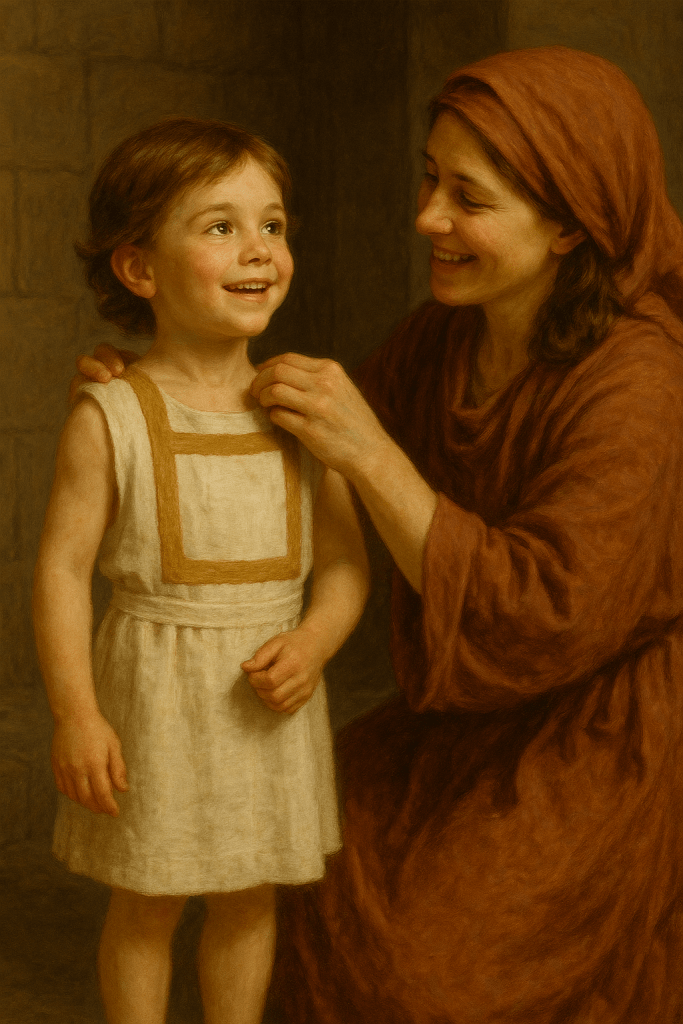
Oh my gosh I used ChatGPT and I’m crying.

 Jo Reads The Bible
Leave a comment