
Thoughts
Ezra 6
King Darius orders a search of the archives to verify that Cyrus made this decree. A scroll is found in the fortress of Ecbatana in Media confirming that Cyrus had authorized the rebuilding of God’s temple in Jerusalem.
Darius commands Governor Tattenai and his associates not to interfere with the work in Jerusalem. He orders that the temple construction cost be funded by royal revenue from the region beyond the River. Animals, grain, wine, and oil are to be provided for sacrifices so the people may pray for the king and his sons.
Darius warns that anyone who alters this decree will be punished severely and calls for God’s judgment against any who destroy His house. Tattenai and the regional officials obey.
The temple is completed on the third day of the month of Adar in the sixth year of King Darius (516 BC).
They then dedicate the temple.
- They offer 100 bulls, 200 rams, 400 lambs, and twelve male goats: one for each tribe of Israel.
- Priests and Levites are appointed according to their divisions to serve in the temple.
The exiles celebrate the Passover on the fourteenth day of the first month. The priests and Levites purify themselves together and slaughter the Passover lamb.
They keep the Feast of Unleavened Bread for seven days.
Ezra 7
(Between Ezra 6 and 7: Esther takes place)
60 years after the temple’s completion, during the reign of King Artaxerxes of Persia, we finally meet Ezra in the book of Ezra. Ezra is a descendant of Aaron. God’s hand is upon Ezra, and the king grants him everything he requests.
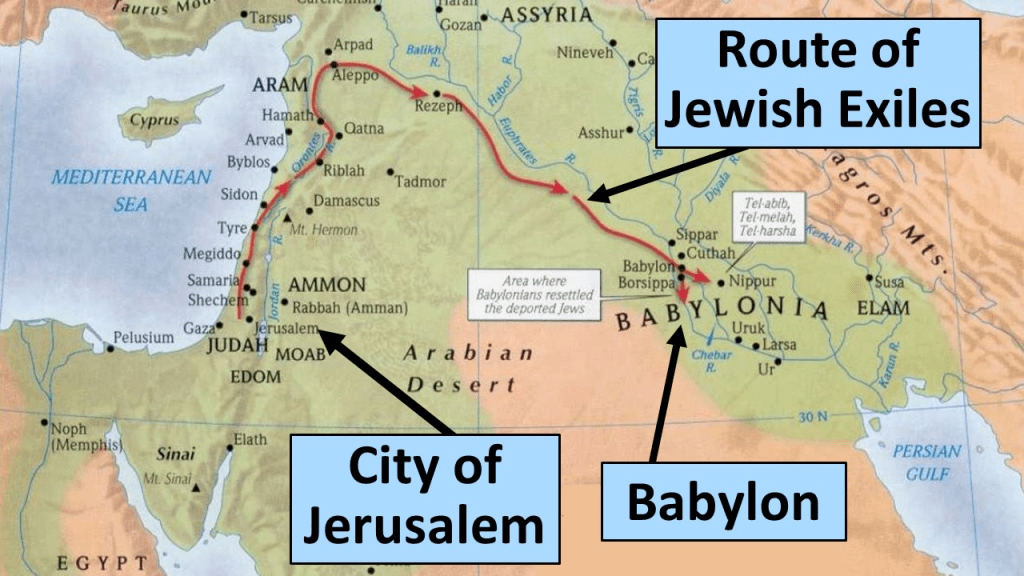
Ezra leads a group of Israelites, priests, Levites, singers, gatekeepers, and temple servants from Babylon to Jerusalem. They depart in the seventh year of King Artaxerxes.
King Artaxerxes issues a formal letter granting Ezra authority and provisions for his mission.Any Israelites who wish to return to Jerusalem with Ezra are permitted to do so.
- Silver and gold are provided for sacrifices, temple service, and other needs.
- Ezra is authorized to take additional funds from the royal treasury.
- Priests, Levites, singers, gatekeepers, and temple servants are exempted from taxes, tribute, or custom.
Ezra is empowered to appoint judges and teach God’s laws throughout the province beyond the River. Those who disobey God’s law or the king’s law are to be punished by death, banishment, confiscation of goods, or imprisonment.
Ezra blesses the Lord, the God of his fathers, for putting such favor into the king’s heart. God has extended steadfast love to Ezra before the king, his counselors, and his mighty officials.
Ezra gathers leading men from Israel to accompany him on the journey.
Ezra 8
Ezra records the names of the heads of families returning with him from Babylon during the reign of King Artaxerxes. Probably 5000 to 7000 people came.
| Family / Line | Leader(s) Named | Number of Men |
|---|---|---|
| Phinehas | Gershom | — |
| Ithamar | Daniel | — |
| David | Hattush | — |
| Parosh | Shecaniah | 150 |
| Pahath-Moab | Zechariah | 200 |
| Zattu | Elihoenai (son of Zerahiah) | 300 |
| Adin | Shemaiah (son of Jahaziel) | 50 |
| Elam | Ebed (son of Jonathan) | 70 |
| Shephatiah | Jeshaiah (son of Athaliah) | 80 |
| Joab | Zebadiah (son of Michael) | 218 |
| Bani | Obadiah (son of Jehiel) | 160 |
| Bebai | Shelomith (son of Josiphiah) | 28 |
| Azgad | Zechariah (son of Bebai) | 110 |
| Adonikam | Johanan (son of Hakkatan) | 60 |
| Bigvai | Eliphelet, Jeuel, Shemaiah | 70 |
Ezra gathers the travelers by the river that flows to Ahava and camps there for three days. He finds no Levites among them. Ezra sends for men of understanding to recruit Levites and temple servants.
By God’s hand, a group of Levites and temple servants joins them for the journey. Before setting out, Ezra proclaims a fast at the river Ahava.
Ezra explains that he was ashamed to ask the king for soldiers and horsemen because he had testified that God protects those who seek Him.
Ezra selects twelve leading priests and entrusts them with the silver, gold, and temple articles for the house of God.
On the twelfth day of the first month, they set out from the river Ahava for Jerusalem. They arrive safely and rest for three days.
On the fourth day after arrival, the silver, gold, and vessels are weighed in the house of God and handed over to the priests.Everything is counted and recorded exactly.
The returning exiles offer burnt offerings: twelve bulls for all Israel, ninety-six rams, seventy-seven lambs, and twelve male goats as a sin offering.
The group delivers the king’s decrees to the governors of the region beyond the River, who then support the people and the temple.
Questions
Why did Darius take Cyrus decree seriously? Wouldn’t a new king not care about old king decrees?
Same with Artaxerxes?
What happened to those who stayed behind in Babylon?
Application
Ezra is introduced as a scribe devoted to the Law of the Lord. He “set his heart to study the Law of the Lord, to do it, and to teach” (Ezra 7:10). To study, to obey and to teach…that sounds like good spiritual leadership. Ezra didn’t rush to instruct others before first diving into God’s Word. His love for the Law made others want to follow God. He is a good example as an effective leader that lived what he learned. Do we let God’s Word transform us in how we share God with others?
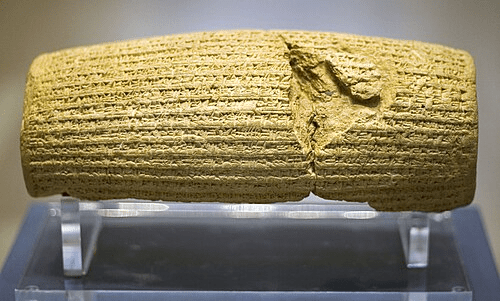
The Cyrus Cylinder: the inscription records a proclamation made by King Cyrus II of Persia in 539 BC.


Leave a Reply