
Thoughts
Esther 7
The king and Haman arrive for Esther’s second banquet. Esther finally reveals her request: that her life and her people’s lives be spared.
She explains they have been sold to destruction, slaughter, and annihilation, repeating the very words of Haman’s decree.She adds that if they had merely been sold as slaves, she would have remained silent.
The king demands to know who is responsible for such a wicked plot. Esther points directly at Haman: “The adversary and enemy is this vile Haman!” Haman is terrified before the king and queen.
The king storms out into the palace garden in anger. Haman stays behind to beg Esther for his life. When the king returns, he finds Haman falling on Esther’s couch, and interprets it as an assault.
Harbona, one of the eunuchs, tells the king about the gallows Haman built for Mordecai. The king orders Haman to be hanged on the very gallows he prepared for Mordecai.
Esther 8
The same day Haman is executed, King Xerxes gives Haman’s estate to Queen Esther.
Esther reveals to the king that Mordecai is her cousin and guardian.The king gives Mordecai his signet ring. Esther appoints Mordecai over Haman’s estate.
Esther again appears before the king, falling at his feet in tears. She pleads for the king to revoke Haman’s evil decree against the Jews.The king extends his golden scepter to her once more, showing favor.
The king tells Esther and Mordecai they may write another decree in his name and seal it with the royal ring. Mordecai writes a new decree allowing the Jews to assemble, defend themselves, and destroy anyone who attacks them. The decree is sent to all provinces in every language, just as Haman’s had been.
Mordecai leaves the king’s presence dressed in royal blue and white, wearing a crown of gold and a purple robe. The Jews celebrate and many people throughout the empire profess to be Jews.
Esther 9
On the appointed day (the thirteenth day of the twelfth month, Adar), the king’s new decree takes effect. The enemies of the Jews hope to overpower them, but the Jews prevail.
Officials and governors support the Jews because they fear Mordecai’s power. The Jews strike down their enemies with the sword.
In Susa, the Jews kill 500 men and the ten sons of Haman. However, they do not seize any plunder.
The king tells Esther about the number killed in Susa.Esther requests that the Jews in Susa be allowed to defend themselves again the next day and that Haman’s ten sons be hanged publicly. The king agrees.
The Jews in Susa kill 300 more enemies on the next day. Throughout the provinces, 75,000 enemies are killed, yet again no plunder is taken.
The Jews in the countryside rest on the fourteenth day of Adar and make it a day of feasting and joy. The Jews in Susa rest on the fifteenth day and celebrate then.
Mordecai records these events and sends letters to all Jews, urging them to celebrate both days yearly as Purim, named after the “pur” (lot) that Haman cast. Queen Esther confirms the decree, establishing Purim as a lasting ordinance.
Questions
Why couldn’t the king just undo the first decree? I know Persian law forbade it but couldn’t a new king make new laws?
Why did people still try to attack the Jews?
Application
Purim reminds us that God is in charge of any story, even those where His name is not mentioned. Haman’s decree meant the Jews were supposed to die, but through a sleepless king, a brave queen, and a man who once sat at the gate, everything changed. The same gallows Haman built for Mordecai became his own downfall, and a day for mourning turned into a day for joy. God is always there to open a door that might seem impossible. Purim calls us to stop and celebrate those hidden rescues.
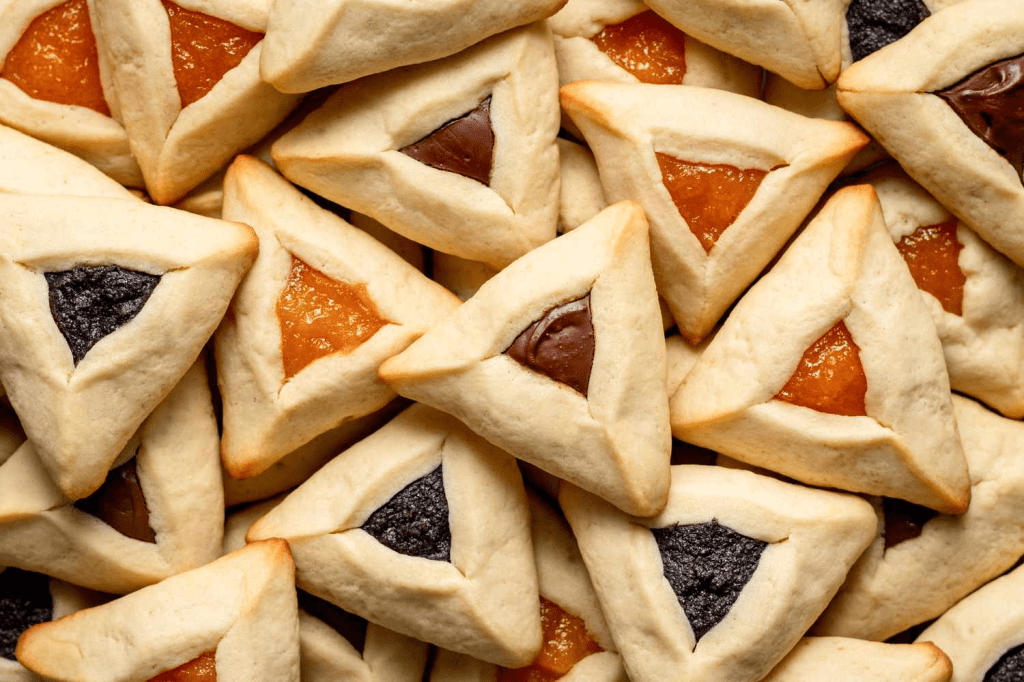
“Hamantaschen” is a Yiddish word meaning “Haman’s pockets” (or sometimes translated “Haman’s ears”).


Leave a Reply