
Joel 3
“In those days and at that time…”
- Connects to Joel 2:28–32 (Spirit + salvation)
- This is future-oriented and beyond the locust plague
- Restoration of Judah and Jerusalem
Valley of Jehoshaphat
- Hebrew: יְהוֹשָׁפָט (Yehoshaphat) = “YHWH judges”
- Likely symbolic, not a specific geographic location
- Revelation 16:12-16
Why judgment? “because of my people…my heritage Israel”
- Nations scattered Israel and divided the land
- Zechariah 14:2
- Matthew 25:31-46
Human trafficking and exploitation
- “cast lots…traded a boy…sold a girl for wine”
- actual moral corruption, not just political issues
Judgment on Specific Nations (Tyre, Sidon, Philistia)
“What are you to me…?”
- These nations are insignificant before God
- Yet still accountable
Their crimes:
- Took God’s treasures
- Sold people into slavery (to Greeks)
Reversal principle: What they did → now done to them
Cf: Obadiah 15 “as you have done, it shall be done to you”
“Proclaim this among the nations: Consecrate for war” “Beat your plowshares into swords” Nations summoned by God Himself
Irony:Nations prepare for battle but they are walking into their own judgment
“Bring down your warriors, O LORD”
- God is the true warrior
- Nations gather unknowingly for divineannihilation
The Day of the LORD (Final Judgment Scene)
Harvest imagery
- “Put in the sickle…winepress is full”
- Sin has reached fullness
- Revelation 14:14–20
“Multitudes in the valley of decision”
- Not human decision but God’s
- Better understood: valley of judgment
Cosmic signs again
- Sun and moon darkened
- Same imagery as Joel 2
Two realities at once: God roars in judgment yet is “a refuge to his people”
The Day of the LORD is:
- terror for enemies
- safety for God’s people
- “You shall know that I am the LORD your God”
Abundance imagery
- Mountains drip sweet wine
- Hills flow with milk
- Streams flowing from the temple
Judgment on Egypt and Edom
“Judah shall be inhabited forever”:Reversal of exile
Final line: “The LORD dwells in Zion”
Amos 1
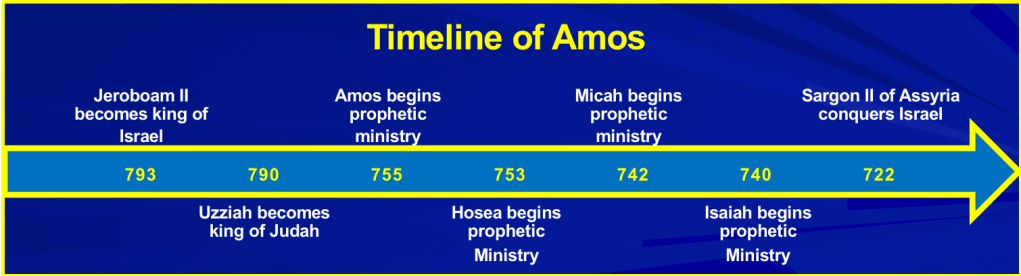
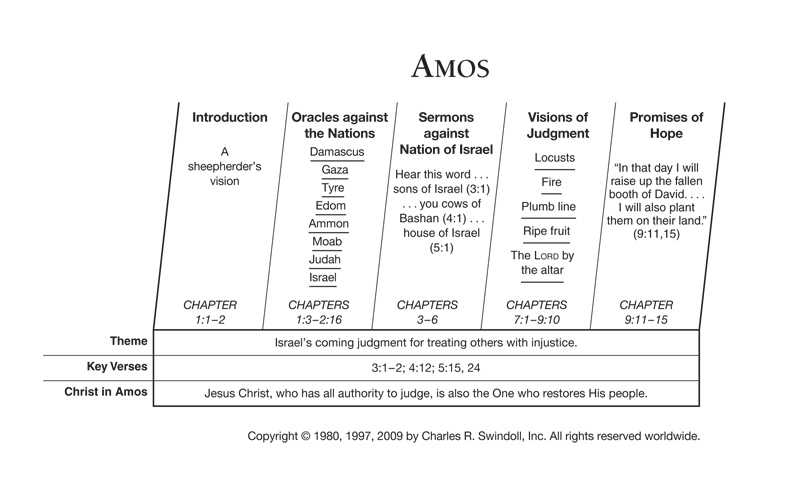
Amos is a shepherd from Tekoa (Judah), sent to the northern kingdom of Israel
- Time period: during prosperity (but deep moral corruption) under Jeroboam II ~760–750 BC
“Two years before the earthquake”??
Repeated phrase: “For three transgressions… and for four…”
- Hebrew idiom = overflowing, repeated sin
Damascus (Syria)
- Crime: extreme cruelty in war
- “threshed Gilead with threshing sledges of iron”
- Judgment: destruction of capital, exile
Gaza (Philistia)
- Crime: slave trade
- “carried into exile a whole people”
- Judgment: cities destroyed
Tyre
- Crime: betrayal of covenant brotherhood
- Likely refers to broken alliances with Israel
Edom
- Crime: relentless anger toward brother nation (Israel)
- No compassion and perpetual hatred
Ammon
- Crime: extreme violence
- ripping open pregnant women to expand territory
- Judgment: destruction and exile
Amos 2
Moab
- Crime: desecration of the dead
- burning bones of king of Edom
- Judgment: destruction of rulers
Judah
- Crime: rejecting God’s law
- “their lies have led them astray”
- Jeremiah 9:13-14
Israel
This is the longest section
Social Injustice
Crimes:
- Selling the righteous for silver
- Exploiting the poor
- Sexual immorality
- Profaning God’s name
God Reminds Them of His Grace
- Destroyed Amorites (gave them land)
- Delivered from Egypt
- Raised up prophets and Nazirites
- God says:“Look at everything I’ve done for you”
Israel’s Rejection of God’s Messengers
- Forced Nazirites to break vows
- Told prophets not to speak
No escape:
- swift cannot flee
- strong cannot stand
- warriors cannot save themselves
Application
Together, these chapters reveal that God’s justice is universal, not only to Israel but to all. He calls us to live with integrity and know that He is the God of both judgment and mercy. We deserve judgment, but His people will always be safe under His ultimate protection.


Leave a Reply