
Micah 1
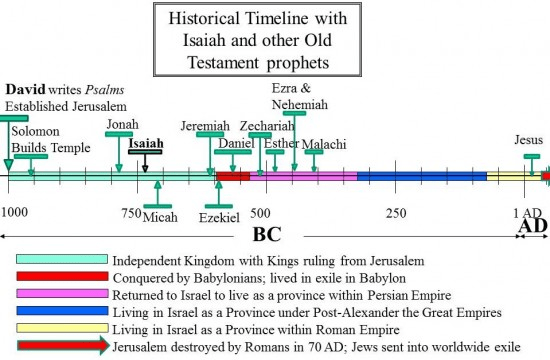
From:https://considerthegospel.org/2017/01/13/the-sign-of-the-branch-the-dead-stump-reborn/
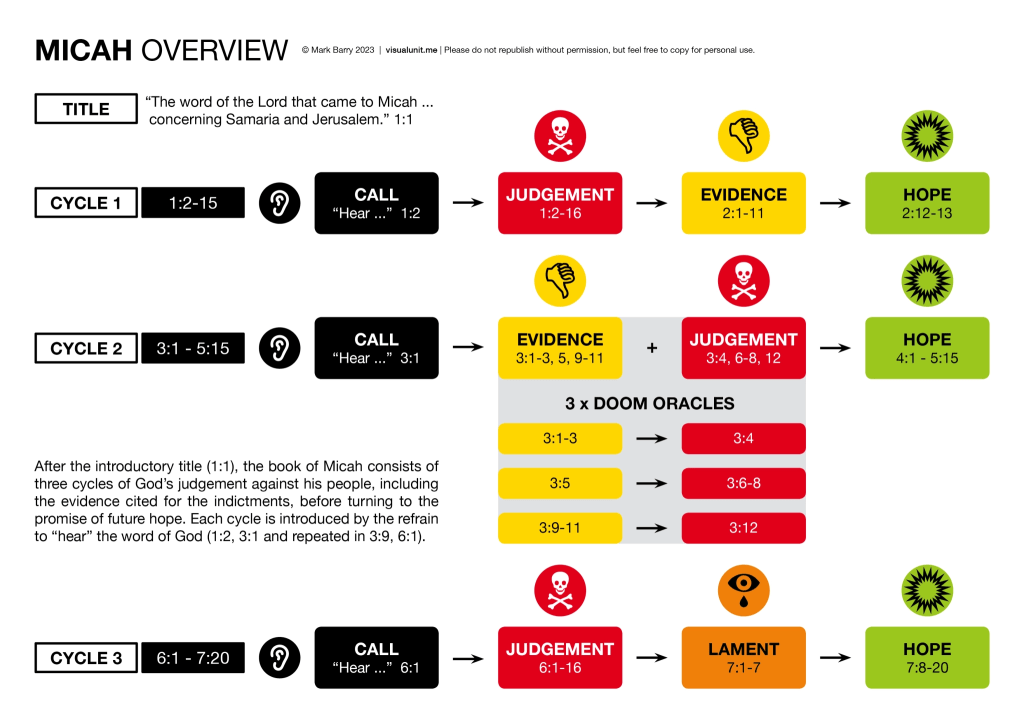
From :https://visualunit.me/2023/01/12/micah-overview-updated/
Historical setting: reigns of Jotham, Ahaz, Hezekiah (Judah kings)
Audience: Samaria (Israel) and Jerusalem (Judah)
Micah = rural prophet (Moresheth)
“Hear, you peoples, all of you”
- God comes as witness and judge
- Theophany imagery: Mountains melting, valleys splitting
Root cause:
- Samaria = rebellion
- Jerusalem = high places (idolatry)
- north and south equally guilty
Judgment on Samaria
Samaria will be reduced to a heap in the open country
- note: Assyria destroys Samaria (722 BC)
Idols smashed, wages burned
- “wages” (אֶתְנַן, ’etnan):
- cult prostitution imagery
- what they’ve gained through idolatry will be taken away
Lament Over Judah
- Micah mourns like a prophet:
- “wail and howl”
- stripped, naked
“Her wound is incurable”
- Judgment spreads from Israel → Judah → Jerusalem
City Lament Wordplay
- Series of puns (Hebrew wordplay)
| City | Hebrew Meaning | Wordplay |
| Gath (גַּת, gat) | “winepress” | Not so much wordplay but “Tell (תַּגִּידוּ) it not in Gath” |
| Beth-le-aphrah (בֵּית לְעַפְרָה) | “house of dust” | “Roll yourselves in the dust” |
| Shaphir (שָׁפִיר) | “beautiful / pleasant” | Will go out in naked shame |
| Zaanan (צַאֲנָן) | “to come out” | “Does not come out” |
| Beth-ezel (בֵּית הָאֵצֶל) | “house beside / nearby house” | Will offer no support/standing or “neighbor” cannot help |
| Maroth (מָרוֹת) | “bitterness” | Waits anxiously for good, but receives disaster |
| Lachish (לָכִישׁ) | possibly “team of horses / chariot city” | “Harness the chariot” |
| Moresheth-gath (מוֹרֶשֶׁת גַּת) | “possession/inheritance of Gath” | “You shall give parting gifts” dowry imagery |
| Achzib (אַכְזִיב) | “deception / lie” | Will prove deceptive to Israel’s kings |
| Mareshah (מָרֵשָׁה) | “possession / inheritance” | “I will bring a possessor/conqueror” |
| Adullam (עֲדֻלָּם) | possibly “refuge / hiding place” | “Glory of Israel shall come to Adullam” |
Micah 2
Sin begins internally: “devise wickedness… on their beds”
- But then publicly: “because it is in the power of their hand”
Key injustice: coveting leading to seizing land
- Violates inheritance laws
Punishment mirrors sin: they divide land → their land divided
- Irony that no one to cast the lot (inheritance lost)
People say: Do not preach”
“Is the Spirit of the LORD impatient?”
- No God’s words do good to the upright
Social injustice:
- stripping garments from the peaceful
- evicting women and children
- attacking the vulnerable
“Arise and go” Reversal:they displaced others now they are displaced
False prophets preferred those who promise wine and strong drink
Sudden shift to hope in verses 12-13
- “I will surely assemble all of you, O Jacob”
- “The breaker (פֹּרֵץ, porets)” one who breaks open the way
- Likely: kingly/Messianic imagery
Micah 3
Leaders should know justice…but instead they are graphically described as those that:
- Strip skin and flesh
- Eat flesh
- Flay skin
- Break bones
- Chop them into pieces
- To eat
Judgment reversal: they ignored cries so God ignores theirs
False prophets:
- “peace” when fed
- war when not fed
- God will bring them to shame
- no vision, no divination
- darkness replaces them
Micah’s contrast: “filled with power… with the Spirit of the LORD”
- A true prophet declares sin boldly
Judgment on Jerusalem
Leaders:
- “abhor justice”
- “make crooked all that is straight”
Jerusalem built on blood and iniquity
Three corrupt groups:
- rulers: bribes
- priests: price
- prophets: money
- Yet they claim:”Is not the LORD in the midst of us?”
- Final judgment:
- Zion plowed like a field
- Jerusalem becomes ruins
- Historically fulfilled:Babylonian destruction (586 BC)
- Quoted in Jeremiah 26:17-19
Application
Micah 1-3 reminds us that God is not impressed by outward religion when our hearts are unjust. We see that sin often begins quietly within us but eventually shows up in how we treat others, especially the vulnerable. We cannot declare that God is with us when we do not follow Him.


Leave a Reply