
- Genesis 11 serves as a flashback to Genesis 10 on how they became scattered (Here are the Nations and Here is How they Scattered)
- One of my favorite ‘discoveries’ my first time reading through: Babel (Hebrew: Bavel, בָּבֶל) is just Babylon (Greek: Βαβυλών, Babylon) which then Genesis 11:9 plays on the Hebrew root balal (בָּלַל), meaning “to confuse”
- Babel can be seen as the opposite of Pentecost (one language becoming many causes humanity to scatter vs. many languages bringing unity through the gospel)
The Tower of Babel
Now the whole earth had one language and the same words. 2 And as people migrated from the east, they found a plain in the land of Shinar and settled there.
- Some translations say they moved eastward instead of migrated from the east
- Moving east is often associated with moving away from God’s presence. Adam and Eve are driven east of Eden (Genesis 3:24), Cain settles east of Eden (Genesis 4:16), Lot journeys east toward Sodom (Genesis 13:11)
3 And they said to one another, “Come, let us make bricks, and burn them thoroughly.” And they had brick for stone, and bitumen for mortar.
- Bitumen is a natural asphalt used in the ancient Near East for waterproofing and as mortar between bricks.
- I learned a new word! Many believe the tower was likely a ziggurat -> that thing there
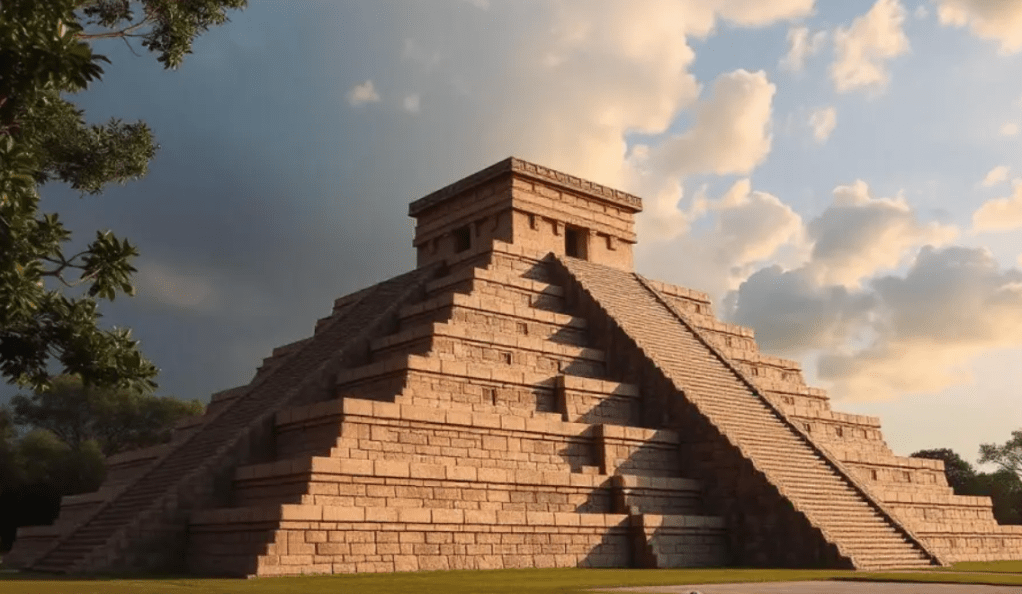
4 Then they said, “Come, let us build ourselves a city and a tower with its top in the heavens, and let us make a name for ourselves, lest we be dispersed over the face of the whole earth.”
- We see a similarity in Exodus 1:10-14 “Come, we must deal shrewdly with them …..They made their lives bitter with harsh labor in brick and mortar”
- Humans try to make a name for themselves which fails. However in the next chapter God tells Abram “I will make of you a great nation, and I will bless you and make your name great…”
5 And the Lord came down to see the city and the tower, which the children of man had built.
- Did God come down in human form?
- Funny irony here as they are trying to build towards heaven, but God still has to “come down” to see it.
6 And the Lord said, “Behold, they are one people, and they have all one language, and this is only the beginning of what they will do. And nothing that they propose to do will now be impossible for them.
- Genesis 11:6 And the Lord said, “ And nothing that they propose to do will now be impossible for them”. What does that mean that ‘nothing will be impossible for them’ in response to building a tall tower? Too much pride/rebellion?
7 Come, let us go down and there confuse their language, so that they may not understand one another’s speech.”
- Who is us? Heavenly beings? 3 in 1? Royal we?
- God uses the same language as the humans in vs. 3-4 “Come let us…”
8 So the Lord dispersed them from there over the face of all the earth, and they left off building the city.
- God could have destroyed the city, but instead decided to scatter them.
9 Therefore its name was called Babel, because there the Lord confused the language of all the earth. And from there the Lord dispersed them over the face of all the earth.
- What did it look like to have them speak different languages- was it divided by family/tribe? Were they given a full set of a language or did they have to develop new ones? Did anyone try to learn a language they were not given?
- I wonder how people dispersed and who chose to go where.
Shem’s Descendants
10 These are the generations of Shem. When Shem was 100 years old, he fathered Arpachshad two years after the flood. 11 And Shem lived after he fathered Arpachshad 500 years and had other sons and daughters.
- Here we get part of the Messianic line
- Notice how lifespans begin to decrease
- Just as Genesis 5 traces Adam to Noah (10 generations), Genesis 11 traces Shem to Abraham (10 generations)
- Shem outlived many of his descendants and was alive when Abram was born! In fact a chunk of these men outlive Abram. See picture at end of notes
- Chart from https://www.biblestudy.org/maps/genealogy-shem-to-abraham.html
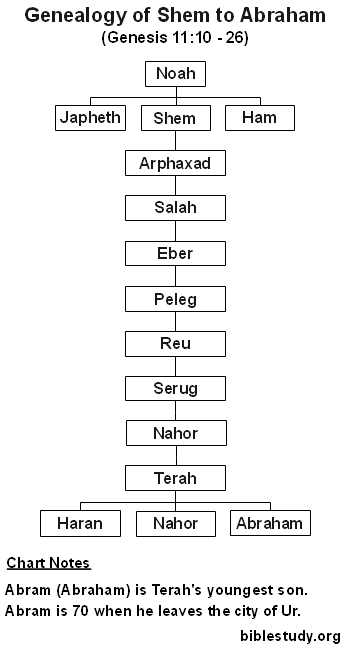
12 When Arpachshad had lived 35 years, he fathered Shelah. 13 And Arpachshad lived after he fathered Shelah 403 years and had other sons and daughters.
14 When Shelah had lived 30 years, he fathered Eber. 15 And Shelah lived after he fathered Eber 403 years and had other sons and daughters.
16 When Eber had lived 34 years, he fathered Peleg. 17 And Eber lived after he fathered Peleg 430 years and had other sons and daughters.
18 When Peleg had lived 30 years, he fathered Reu. 19 And Peleg lived after he fathered Reu 209 years and had other sons and daughters.
20 When Reu had lived 32 years, he fathered Serug. 21 And Reu lived after he fathered Serug 207 years and had other sons and daughters.
22 When Serug had lived 30 years, he fathered Nahor. 23 And Serug lived after he fathered Nahor 200 years and had other sons and daughters.
24 When Nahor had lived 29 years, he fathered Terah. 25 And Nahor lived after he fathered Terah 119 years and had other sons and daughters.
26 When Terah had lived 70 years, he fathered Abram, Nahor, and Haran.
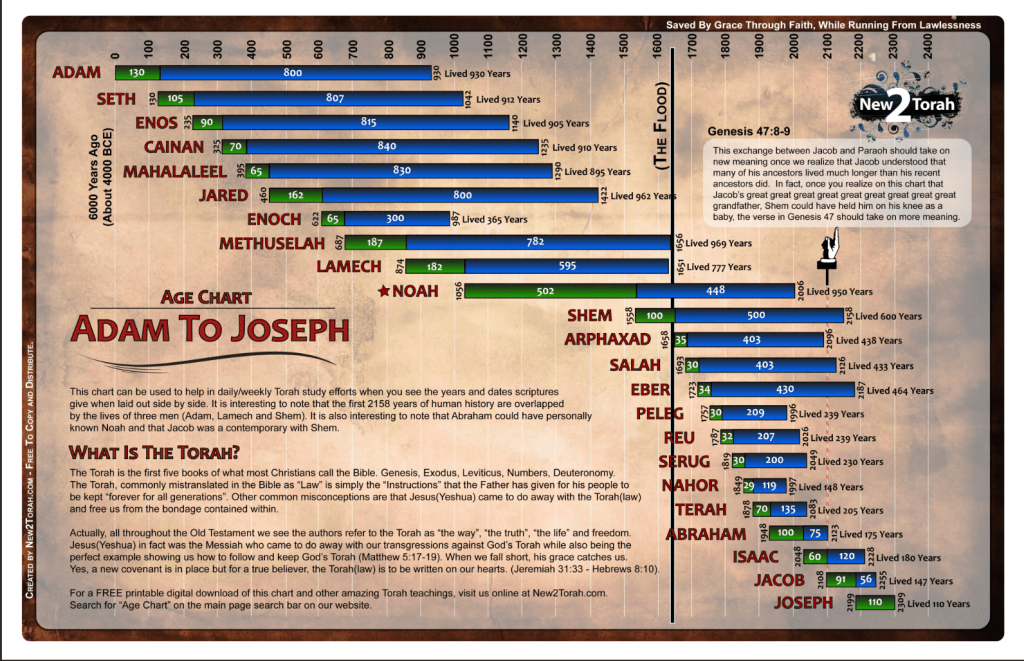
from https://weareisrael.org/2012/05/08/noah-and-abraham/
Terah’s Descendants
27 Now these are the generations of Terah. Terah fathered Abram, Nahor, and Haran; and Haran fathered Lot. 28 Haran died in the presence of his father Terah in the land of his kindred, in Ur of the Chaldeans. 29 And Abram and Nahor took wives. The name of Abram’s wife was Sarai, and the name of Nahor’s wife, Milcah, the daughter of Haran the father of Milcah and Iscah.
- Ur was a major city in Mesopotamia, full of idolatry (especially to the ‘moon god’ Nanna)
30 Now Sarai was barren; she had no child.
- Abram אַבְרָם means אַב (av) = father, רָם (ram) = exalted/ high….yet his wife was barren
31 Terah took Abram his son and Lot the son of Haran, his grandson, and Sarai his daughter-in-law, his son Abram’s wife, and they went forth together from Ur of the Chaldeans to go into the land of Canaan, but when they came to Haran, they settled there. 32 The days of Terah were 205 years, and Terah died in Haran.
- In Acts 7, Stephen says that God appeared to Abram before he lived in Haran. Was the reason that Terah took his family towards Canaan because God told them to? Why stop at Haran? Joshua 24:2 mentions that Terah was an idol worshipper, perhaps he had a hard time leaving his city.
- Later on in Genesis 20 Abram says Sarai is born of their father – but interesting here she is called Terah’s daughter-in-law instead of daughter (I mean technically both).


Leave a Reply