
Thoughts
Exodus 11 is one of the shortest chapters in the Torah with only 10 verses (Behind Leviticus 12 with 8 verses)
Exodus 11 is confusing, because Exodus 10 ends with Moses saying that he would never see Pharaoh’s face again, but then in Exodus 11 he is talking to Pharaoh again. Some say this chapter is a continuation of the conversation from before.
Pharaoh was unconvinced, but the people of Egypt were ready for the Israelites TO LEAVE – and they saw Moses as a great man of YHWH
“…a dog shall not sharpen/move its tongue” means absolute peace and protection
Exodus 11:8 “All these your servants shall come down to me and bow down to me, saying, ‘Get out, and all the people who follow you” Egypt will turn on Pharaoh in a reversal of power – kicking the Israelites out themselves.
This passage is hard to read after knowing all of Egypt except Pharaoh wanted Israelites gone. At this point they had seen the hand of YHWH and knew of the destruction that was brought with harboring these people. However because of Pharaoh’s stubbornness, they lost their firstborns.
With the 10th plague in motion, there has been a complete de-creation in Egypt.
Exodus 12:1-2 marks a huge shift that YHWH Himself told Israel to recreate their calendars!
They are commanded to eat the lamb with bitter herbs and unleavened bread. Today Jews use the symbol of bitter herbs to be reminded of the bitterness of slavery and unleavened bread to remember the haste they left Egypt ( no time to leaven). BUT is that why God commanded the bitter herbs and unleavened bread? I honestly don’t know. Later in Exodus it does say they had to leave so fast the dough could not rise, but the only other explanation for ‘bitterness’ would be in Exodus 1 when it talks about the bitterness of slavery.
Hyssop shows up in the Bible as a symbol of cleansing. David says, “Purge me with hyssop” in Psalm 51, asking God to cleanse him. And at the cross, a branch of hyssop was used to lift sour wine to Jesus (John 19:29), tying back to the Passover moment.
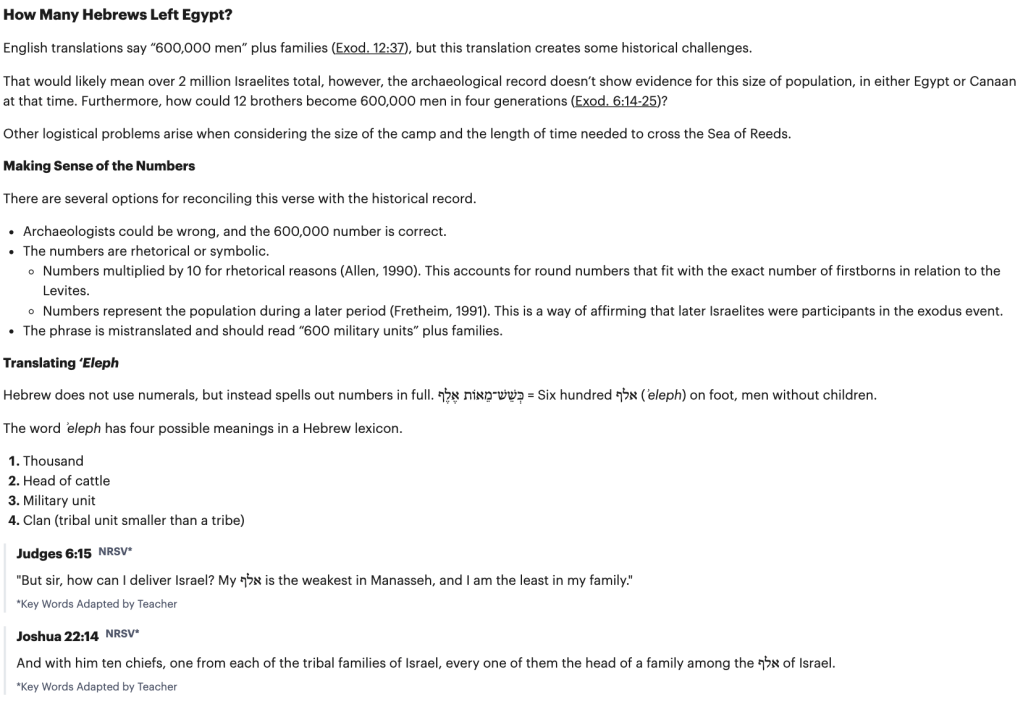
There is the debate about Exodus 12:37 saying that 600,000 Israelites (about 2 million with women and children) left. I included BP’s options on this from https://bibleproject.com/classroom/exodus-overview-carmen-imes/sessions/11 below. We do know it was a very large number and that they were multiplying fast.
God already knew what Israel would do if they were led through Philistia
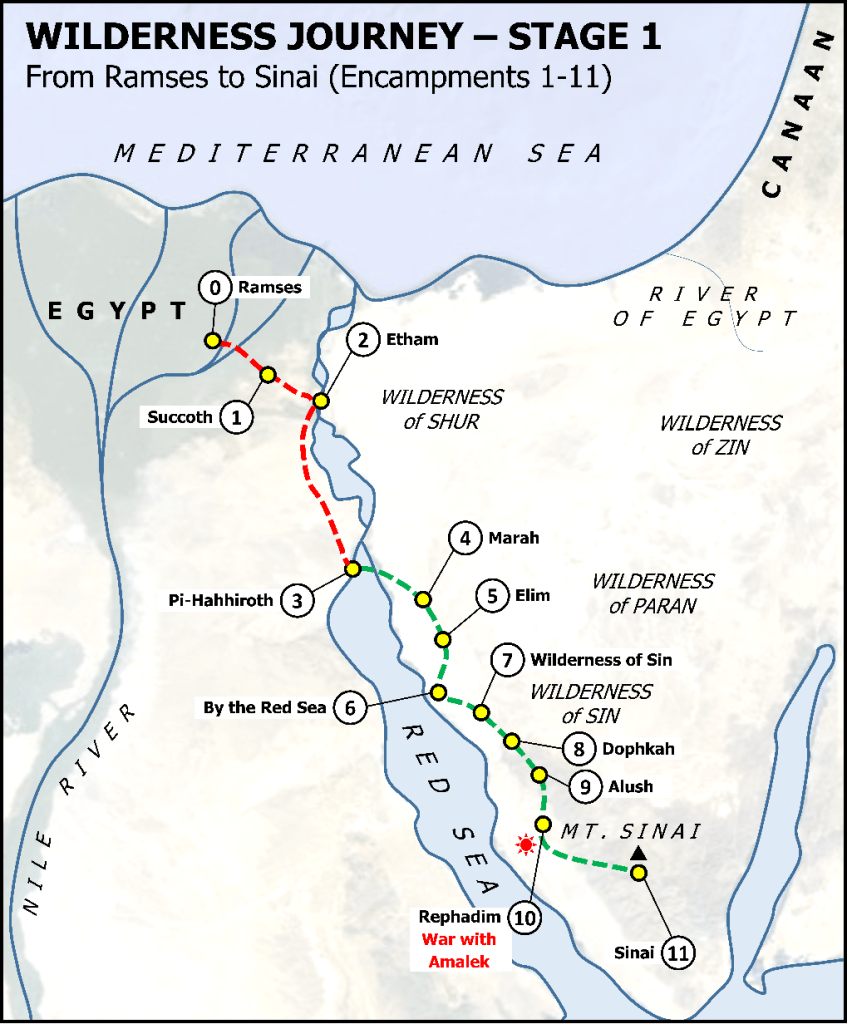
I went through like 20 maps of what this exodus would look like. No one knows the exact route or where some of the exact locations were (or even the true part of the sea of reeds crossing!) I included a map below I liked and that was simple and kind of averaged out the other maps I looked at (https://www.realclearbible.com/exodus/_13-15a/)
This isn’t the first or last time God appears as fire – we have seen Him through the burning bush, now the pillar of fire, and later He will descend like fire on Mount Sinai and through flaming tongues of fire as the Holy Spirit.
Questions
How many Egyptians decided to follow YHWH after all this?
Would there have been any chance for a now believing Egyptian to follow Israel? It says a ‘mixed multitude’ followed them.
What is the cutoff for a ‘blemished’ animal – obviously no signs of sickness or deformities, but were spots ok? Scraped hooves?
Were their any Hebrews who did not follow Passover and lose their first born? Or were their any Egyptians that could have followed the Passover ritual? But how would they have known about it? Exodus 12 does mention “…for there was not a house where someone was not dead.”
Did adults die as well in the passover? Wouldn’t Pharaoh be a firstborn?
Exodus 13 opens up with “The Lord said to Moses, 2 “Consecrate to me all the firstborn. Whatever is the first to open the womb among the people of Israel, both of man and of beast, is mine.”” I know what this will eventually look like, but what did God want in that moment as they are leaving? Was it to set aside in their hearts for now?
Application
God’s plan feels more real than ever to the Israelites. We see God’s power heavily in these three chapters: the promise of letting His people go, the Passover, and the mass exodus while being completely provided for. His people get to leave boldly, taking all that they need and deserve, and march out of Goshen into the unknown. And if the signs weren’t enough, they now get to see a physical representation of God day and night through smoke and fire. While we might not directly hear God like Moses did or physically see His representation day and night, He is just as present and powerful as ever. His plans can seem long and complicated to us, but they will be worth it in the end.
 Jo Reads The Bible
Leave a comment