
Thoughts
Exodus 32
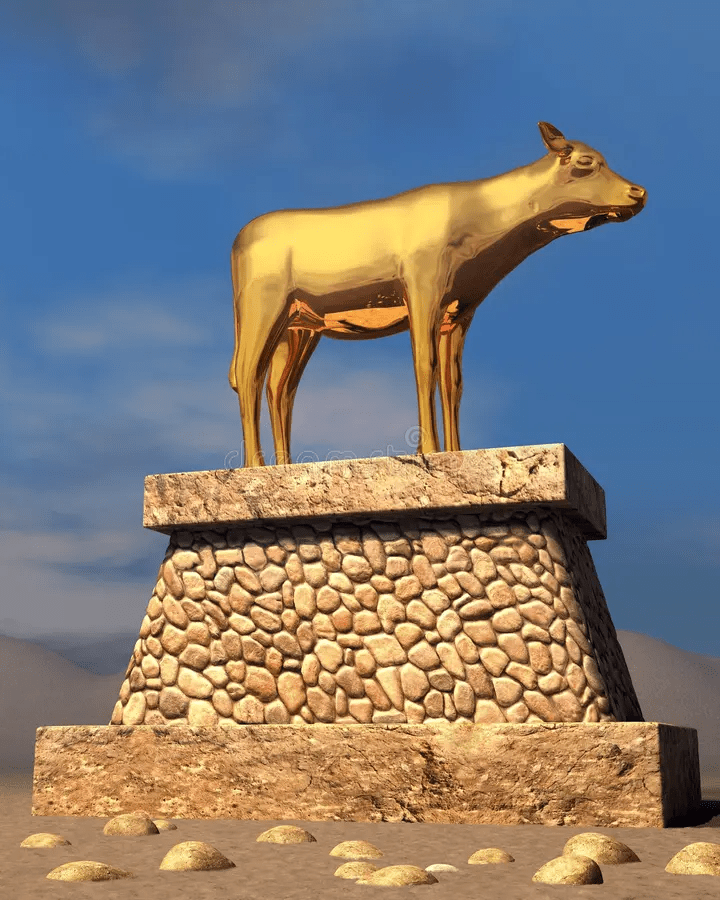
In Egypt, bull or calf idols (like Apis) represented strength or fertility
A lot of my work looks at the “intolerance of uncertainty” or a tendency to believe uncertainty is negative or unable to deal with uncertainty. Seems like this is what happening here.
It is really odd that after Aaron himself crafts the idol, and the Israelites say “these are your gods who brought you out of Egypt”, Aaron decides to have a feast for YHWH. What is happening here? Some say he was trying to please the Israelites by giving them an idol but giving honor to YHWH somehow through it.
“play” (צָחַק tsaḥaq) in Exodus 32:6 may have been sexual or just meant “laughter” (similar to Isaac’s name Yitzhak יִצְחָק). It is thought to be sexual because we see similar word in Genesis 26:8, where Isaac is seen “laughing” (meṣaḥēq) with Rebekah which is clearly implying intimacy, as Abimelech recognizes her as his wife, not his sister. This “play” during the golden calf incident may have included “play” with immoral or sexual overtones. Verse 25 also has the Hebrew word translated “running wild” or “out of control” is פָּרֻעַ (paruaʿ), from the root פָּרַע (paraʿ), which means to neglect, or make bare. I’m not totally convinced. I think the act of worshipping the god would be running wild and out of control…
If sexual immorality was central, the text might have used clearer Hebrew terms like zanah??? (זָנָה to fornicate)….but whatever it was brought shame and public disgrace.
Exodus 32:9 is the first time the phrase “stiff-necked people” appears in the Bible (similar to animal not turning it’s neck with a rope)
Moses’ intercession for Israel in Exodus 32 reminds me to Abraham’s plea for Sodom in Genesis 18. Both step in to ask God for mercy, despite the people’s sin. Abraham appeals to God’s justice, while Moses reminds God of His promises and reputation
In Exodus 32:14, most English translations say God “relented,” “repented,” or “changed His mind.” The Hebrew word used is נִחָם (niḥam), which can mean to relent or reconsider. The Septuagint (Greek translation) uses the word ἱλάσθη (hilasthē), meaning God was appeased or showed mercy,
Technically the Israelites haven’t had the 10 commandments yet in physical form, but God spoke to all of them before Moses went up the mountain correct?
vs 4 shows how Aaron carefully crafted the calf using the gold, but here in verse 24 the calf ‘appeared’
Blot me out of your book: some say this is the Book of Life, some say its more like an earthly register/symbol
Exodus 33
Ornaments: The Hebrew word used is עֶדִי (ʿedi), which refers to decorative items such as earrings, necklaces, bracelets, etc.
We now have a tabernacle of meeting – used before the official tabernacle was built
God is leading them to the Promised Land but with the potential of His presence not being there. Is it worth it to Israel?
“Thus the Lord used to speak to Moses face to face, as a man speaks to his friend.” AHHHH! How cool is that.
Exodus 34
“You shall not make for yourself any gods of cast metal.” God has to be REAL literal with them
In Exodus 34:14, God’s name is “Jealous” קַנָּא (qannāʾ) in Hebrew
God repeats several covenant laws:
- Keep the Feast of Unleavened Bread
- Dedicate firstborns to God
- Keep the Sabbath
- Celebrate three pilgrimage festivals
- Don’t appear before God empty-handed
- No boiling a young goat in its mother’s milk
Moses’ veil is an interesting symbol of the distance between God’s holiness and the people’s readiness to receive it
Questions
Did everyone drink the calf? Just leaders?
Why did only tribe of Levi respond to Moses about being on God’s side?
Why were those 3000 chosen to die? Were they leading sin?
What does the face of God look like in His full glorious form?
Do we still get such glimpses today?
How did he survive 40 days with no water?
Application
It’s hard not having something tangible especially when it comes to the God we worship. We’re a “need to see it to believe it” kind of people, and I guess the same was true thousands of years ago. Moses was gone for 40 days, but uncertainty took over their faith, and they looked for “the next best thing.” I usually read this chapter rolling my eyes, as if I’m somehow holier than the Israelites..but how many times do I turn to my own idols when I don’t have the proof of God that I demand? Idols aren’t just the gods we think of from the Old Testament, they can be anything that takes the place of God. Family can be an idol… health… school… anything.
 Jo Reads The Bible
Leave a comment