
Thoughts
Kings 24
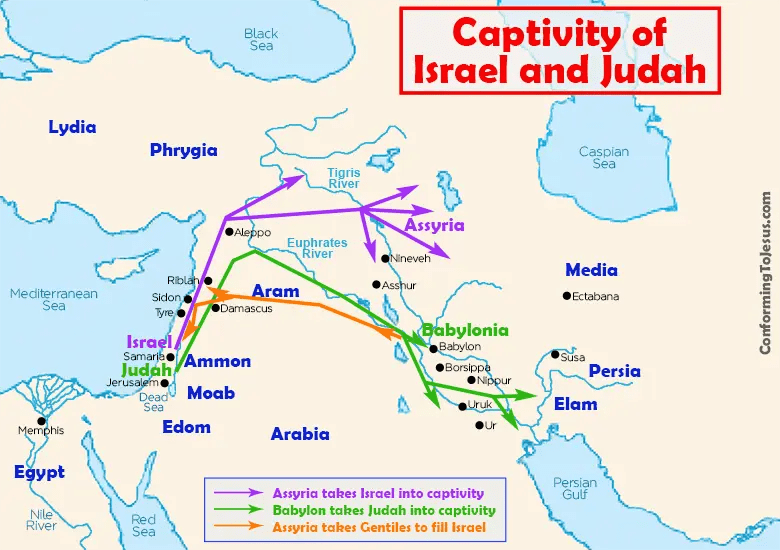
REMINDER: The northern kingdom/Israel (10 tribes) had already fallen about 150 years earlier. Assyria captured Samaria (722 BC) and deported most of the Israelites. (2 Kings 17)
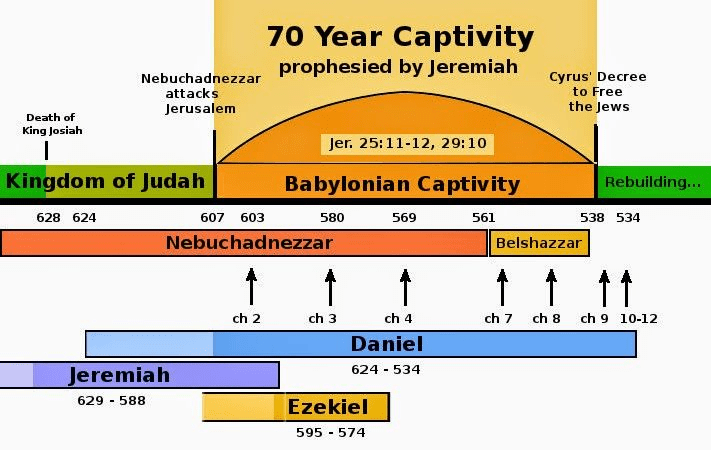
Nebuchadnezzar king of Babylon (same one from Daniel) comes against Judah. Jehoiakim serves him three years, then rebels.
God sends Babylonian, Aramean, Moabite, and Ammonite raiders as judgment because of Manasseh’s sins.
Nebuchadnezzar controls the land; Egypt retreats and no longer dominates Judah.
Jehoiakim dies; his son Jehoiachin (18 years old) becomes king in Jerusalem. He reigns only three months and does evil in the Lord’s sight, like his father.
- 2 Chronicles 36:9 says he was 8- most likely a mistake.
Nebuchadnezzar besieges Jerusalem during Jehoiachin’s reign. Babylon carries them off into exile (Jehoiachin and 10,000 captives). Temple treasures and gold vessels are taken to Babylon.
The king of Babylon appoints Mattaniah (מַתַּנְיָה : “Gift of Yahweh” or “Gift of the LORD.”) (Jehoiachin’s uncle) as king, renaming him Zedekiah(צִדְקִיָּהוּ: “Righteousness of Yahweh”)
Zedekiah begins to reign at age 21, ruling 11 years in Jerusalem. He does evil in the Lord’s sight.
Zedekiah eventually rebels against the king of Babylon, setting the stage for the final fall.
Kings 25
Around 586 BC
In Zedekiah’s ninth year, Nebuchadnezzar lays siege to Jerusalem. After nearly two years, famine grows severe, and the city wall is breached.
Zedekiah and his soldiers flee but are captured near Jericho. He is captured and his sons are killed before his eyes, then his eyes are put out, and he is taken in chains to Babylon.
Nebuzaradan, commander of the guard, arrives and sets fire to the Temple, the palace, and Jerusalem’s houses.The walls around Jerusalem are torn down.
Items Destroyed or Carried Away
- Two bronze pillars that stood at the entrance of the temple (named Jachin and Boaz in 1 Kings 7:21).
- The movable stands (basins on wheeled frames) used for washing (1 Kings 7:27–39).
- The bronze Sea (a massive basin resting on twelve bronze bulls).
- pots, shovels, wick trimmers, dishes, and all other bronze articles used in temple service.
- firepans and sprinkling bowls
Priests, officers, and leaders are captured and brought to Nebuchadnezzar at Riblah to be executed. The rest of the people are carried into exile.
Nebuchadnezzar appoints Gedaliah over the remaining people in Judah. Gedaliah urges them to settle down and serve Babylon.
Ishmael, a royal descendant, assassinates Gedaliah and the Babylonians with him. People now flee to Egypt.
In the 37th year of Jehoiachin’s exile, Evil-Merodach (king after Nebuchadnezzar) shows him kindness He is released from prison, given a seat of honor, and provided with a daily allowance.
Chronicles 1
Check out this insane visual of the genealogies!! https://docs.google.com/file/d/0BzUFFfOai8kURWxnTkR5UFBmYk0/edit?resourcekey=0-7Ls53D71Ilv0iGPlzBxTrQ
From Adam to Noah (vv. 1–4)
Adam → Seth → Enosh → Kenan → Mahalalel → Jared → Enoch → Methuselah → Lamech → Noah→ Shem, Japheth, Ham.
Enoch: walked with God and did not die (Genesis 5:24).
Methuselah: oldest man recorded
Descendants of Japheth (vv. 5–7)
Japheth → Magog, Madai, Tubal, Meshech, Tiras, Gomer, Javan
Gomer → Ashkenaz, Riphath, Togarmah
Javan → Elishah, Tarshish, Kittim, Rodanim
Descendants of Ham (vv. 8–16)
Ham → Put, Cush, Canaan, Mizraim (Egypt)
Cush → Seba, Havilah, Sabta, Raamah, Sabteka, Nimrod
Raamah → Sheba, Dedan
Nimrod: mighty hunter; founder of Babylon and Nineveh.
Cush: ancestor of Ethiopians/Nubians.
Mizraim → Ludim, Anamim, Lehabim, Naphtuhim, Pathrusim Casluhitm (from whom the Philistines came), Caphtorim
Canaan → Sidon (firstborn), Hittites, Jebusites, Amorites, Girgashites, Hivites, Arkites, Sinites, Arvadites, Zemarites, Hamathites
Descendants of Shem (vv. 17–27)
Shem → Elam, Asshur, Arphaxad, Lud, Aram
Asshur: founder of Assyria
Arphaxad → Shelah → Eber → Peleg, Joktan
Eber : ancestor of the Hebrews; name connected to “Hebrew.”
Joktan → Almodad, Sheleph, Hazarmaveth, Jerah, Hadoram, Uzal, Diklah, Obal, Abimael, Sheba, Ophir, Havilah, Jobab
Peleg → Reu → Serug → Nahor → Terah → Abram (Abraham)
Aram → Uz, Hul, Gether, Meshek
Peleg → Reu → Serug → Nahor → Terah → Abram (Abraham)
Descendants of Abraham (vv. 28–34)
Abraham → Isaac, Ishmael, Keturah’s sons
Isaac → Esau, Israel (Jacob)
Ishmael → Nebaioth, Kedar, Adbeel, Mibsam, Mishma, Dumah, Massa, Hadad, Tema, Jetur, Naphish, Kedemah (12 sons)
Ishmael: father of 12 tribes in Arabia.
Keturah’s sons → Zimran, Jokshan, Medan, Midian, Ishbak, Shuah
Jokshan → Sheba, Dedan
Midian → Ephah, Epher, Hanoch, Abida, Eldaah
Midian (through Keturah): father of Midianites; Moses married into this line.
Edomite Leaders (vv. 35–54)
Esau → Eliphaz, Reuel, Jeush, Jalam, Korah
Eliphaz → Teman, Omar, Zepho, Gatam, Kenaz, Amalek (from Timna)
Amalek: ancestor of the Amalekites, enemies of Israel.
Reuel → Nahath, Zerah, Shammah, Mizzah
Chiefs of Edom (from Esau’s sons)
Chiefs from Eliphaz: Teman, Omar, Zepho, Kenaz, Timna, Amalek
Chiefs from Reuel: Nahath, Zerah, Shammah, Mizzah
Chiefs from Esau’s other sons: Jeush, Jalam, Korah
Kings of Edom (before Israel had kings)
Bela son of Beor (city: Dinhabah)
Jobab son of Zerah (city: Bozrah)
Husham (from the land of the Temanites)
Hadad son of Bedad (city: Avith; defeated Midian in Moab)
Samlah (from Masrekah)
Shaul (from Rehoboth on the River)
Baal-Hanan son of Acbor
Hadad (city: Pau; wife Mehetabel, daughter of Matred, granddaughter of Me-Zahab)
Chiefs of Edom (clan leaders)
Timna, Alvah, Jetheth, Oholibamah, Elah, Pinon, Kenaz, Teman, Mibzar, Magdiel, Iram
Questions
Why is Manasseh’s sin singled out as the reason for Judah’s downfall, even though other kings were wicked too?
Why did Nebuchadnezzar change Mattaniah’s name to Zedekiah was it to show dominance or did the name carry significance?
Why is there such detail about the bronze pillars, basins, and furnishing?
Application
2 Kings 24 and 25 shows God’s justice on sin and rebellion. Even God’s chosen nation is not exempt from consequences. However, the end of 2 Kings gives us a glimpse of hope with Jehoiachin’s release, in that God’s covenant line will continue. 1 Chronicles then reminds us of the stories woven through the genealogies of the nations. Today we can trust that God is continuing to weave our lives through His ultimate story.


Leave a Reply