
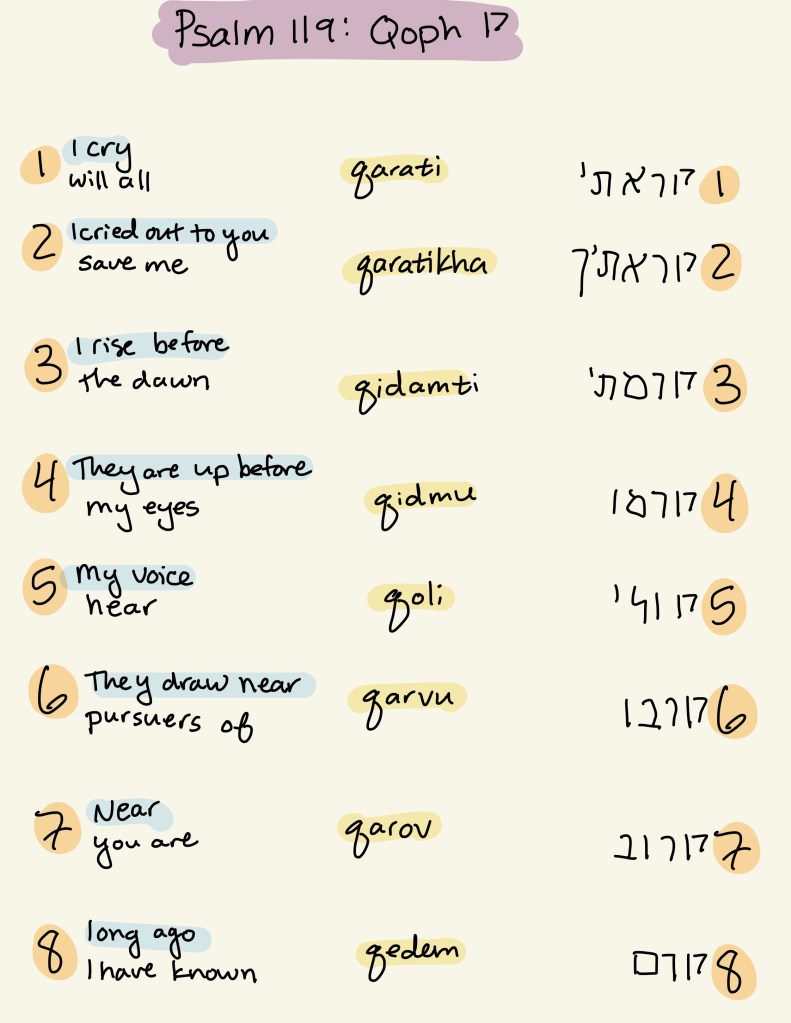
Koph (ק)
With my whole heart I cry; answer me, O LORD!
I will keep your statutes.
I call to you; save me,
that I may observe your testimonies.
I rise before dawn and cry for help;
I hope in your words.
- “Whole heart” undivided loyalty
- Hope is anchored not in rescue alone, but in God’s words
- Rising “before dawn” highlights urgency
My eyes are awake before the watches of the night,
that I may meditate on your promise.
Hear my voice according to your steadfast love;
O LORD, according to your justice give me life.
- Awake before night watches suggest sleepless nights
- Meditation is tied to אִמְרָתֶךָ (imratekha, “your promise/utterance”
They draw near who persecute me with evil purpose;
they are far from your law.
But you are near, O LORD,
and all your commandments are true.
Long have I known from your testimonies
that you have founded them forever.
- enemies are “near,” yet far from Torah; God is “near” and aligns with His Word
- God’s nearness outweighs the threat of humans
- God’s word is not temporary instruction but eternally founded truth.
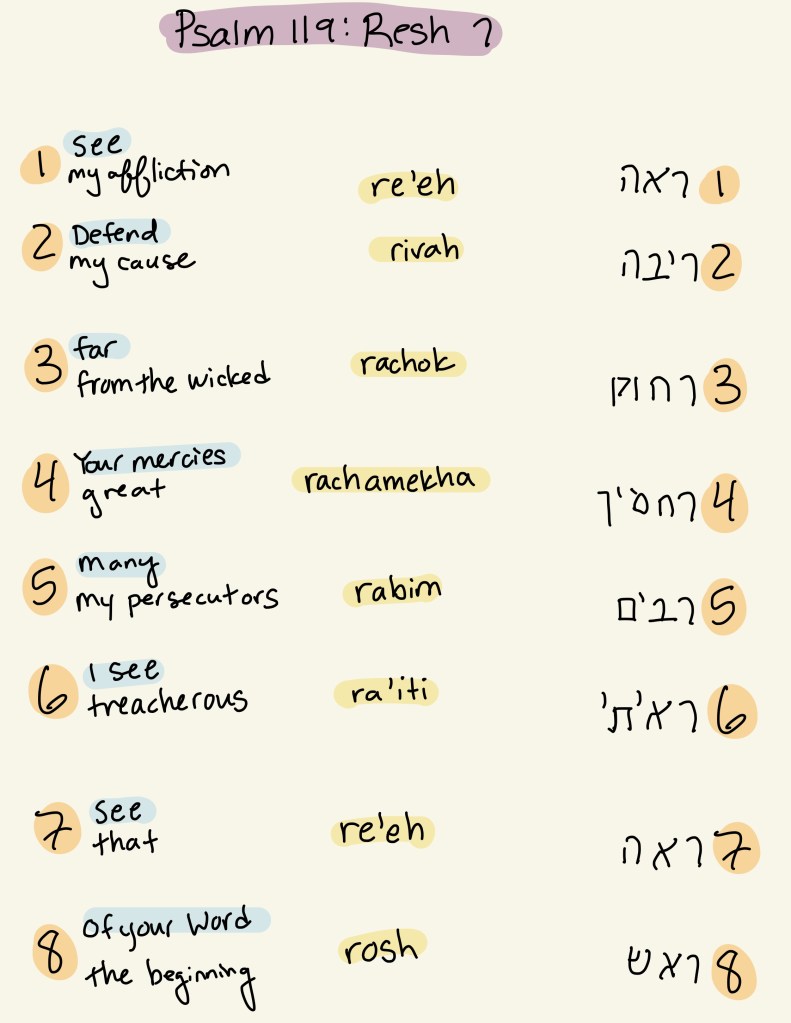
Resh (ר)
Look on my affliction and deliver me,
for I do not forget your law.
Plead my cause and redeem me;
give me life according to your promise.
- A plea for deliverance from an affliction.
- “Plead my cause and redeem me” frames God as advocate and redeemer, not merely rescuer.
- Life is requested according to God’s word, not according to circumstances.
Salvation is far from the wicked,
for they do not seek your statutes.
Great is your mercy, O LORD;
give me life according to your rules.
- Distance language: salvation is “far” because the wicked do not seek God’s ways.
- Mercy (רַחֲמֶיךָ, raḥamekha) is emphasized as abundant and ongoing.
Many are my persecutors and my adversaries,
but I do not swerve from your testimonies.
I look at the faithless with disgust,
because they do not keep your commands.
- Disgust at the rejection of God’s Word
Consider how I love your precepts!
Give me life according to your steadfast love.
The sum of your word is truth,
and every one of your righteous rules endures forever.
- “The sum of your word” truth is found not by picking favorites but by trusting the whole.
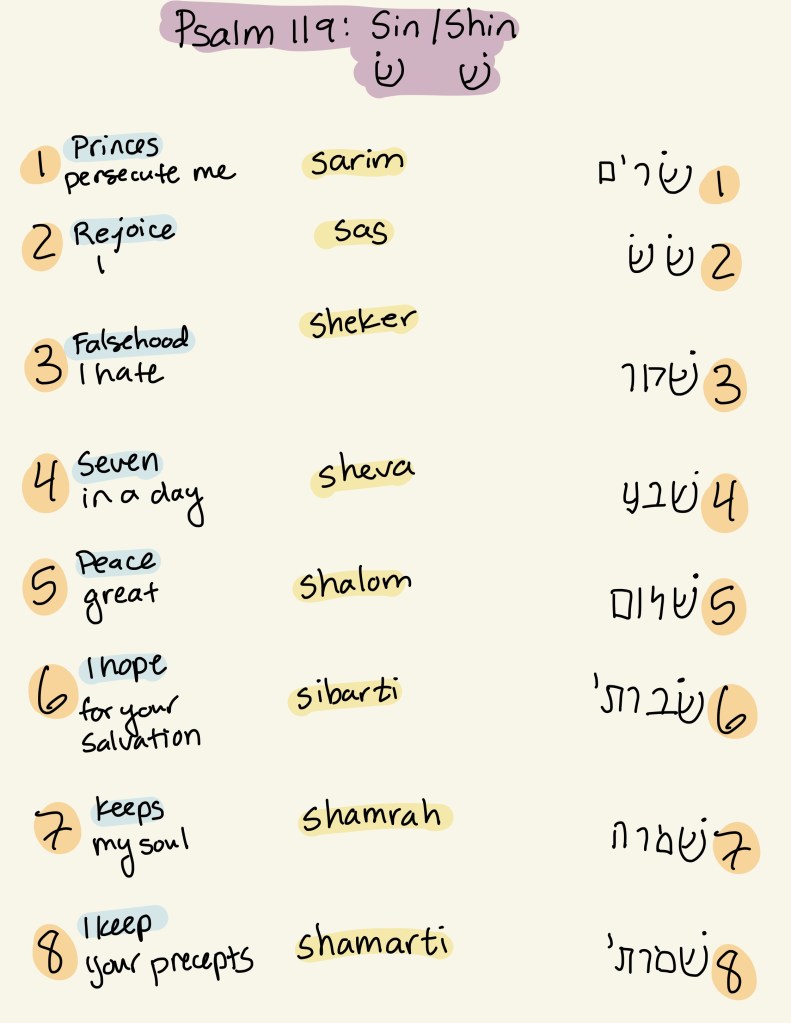
Shin (ש)
Princes persecute me without cause,
but my heart stands in awe of your words.
I rejoice at your word
like one who finds great spoil.
- Opposition comes from the powerful, not just the wicked
- the heart is ruled by awe of God’s Word, not fear of the princes
- God’s word is valued more than riches
I hate and abhor falsehood,
but I love your law.
Seven times a day I praise you
for your righteous rules.
- Hatred of falsehood is paired directly with love for Torah
- “Seven times” signals completeness, not rigid ritual
Great peace have those who love your law;
nothing can make them stumble.
- שָׁלוֹם רָב (shalom rav, “abundant peace”)
- Peace is connected to love for the law
I hope for your salvation, O LORD,
and I do your commandments.
My soul keeps your testimonies;
I love them exceedingly.
- Hope and obedience are connected
- Love for God’s testimonies is described as abundant
I keep your precepts and testimonies,
for all my ways are before you.
- Faithfulness is lived before God, not for human approval.
Application
Koph (ק) invites us to bring your whole heart to God, not a filtered or edited version. Let urgent times drive you toward the Word, not away from it. Resh (ר) shows us that we can trust that God sees affliction even when it feels unseen by others. We can rest in God when our seasons feel unstable. Shin (ש) shows us how to choose awe over fear. Our love for the Bible can shape our inner peace. Peace doesn’t mean no trouble, it just means stability in hardship.


Leave a Reply