
Laws for Burnt Offerings
The Lord called Moses and spoke to him from the tent of meeting, saying, 2 “Speak to the people of Israel and say to them, When any one of you brings an offering to the Lord, you shall bring your offering of livestock from the herd or from the flock.
- Leviticus picks up right where Exodus ends. The Tabernacle has been completed, the glory of YHWH has filled it, and now God speaks to Moses
- It says God spoke to Moses in the tent of meeting – was this the old tent of meeting or the new tabernacle?
- This is HUGE after everything in Exodus. God said He wanted to dwell among His people, and now He does. But there is a problem: How can sinful people approach a holy God who now lives in their midst?
- Leviticus begins answering this question through chapters on sacrifices, priests, purity, and holiness.
3 “If his offering is a burnt offering from the herd, he shall offer a male without blemish. He shall bring it to the entrance of the tent of meeting, that he may be accepted before the Lord.
- This chapter is on the burnt offering: olah (עֹלָה) which comes from the root עלה (alah), which means “to ascend” or “go up.”
- We see this first in Genesis 8:20 when Noah offered burnt offerings
- These are voluntary offerings for YHWH
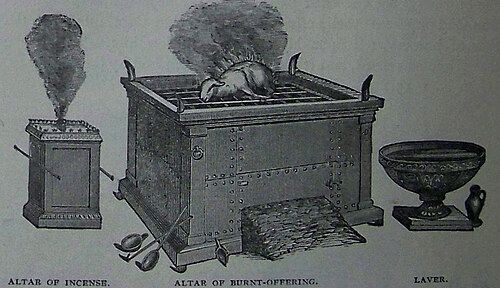
4 He shall lay his hand on the head of the burnt offering, and it shall be accepted for him to make atonement for him. 5 Then he shall kill the bull before the Lord, and Aaron’s sons the priests shall bring the blood and throw the blood against the sides of the altar that is at the entrance of the tent of meeting. 6 Then he shall flay the burnt offering and cut it into pieces, 7 and the sons of Aaron the priest shall put fire on the altar and arrange wood on the fire. 8 And Aaron’s sons the priests shall arrange the pieces, the head, and the fat, on the wood that is on the fire on the altar; 9 but its entrails and its legs he shall wash with water. And the priest shall burn all of it on the altar, as a burnt offering, a food offering with a pleasing aroma to the Lord.
- This first section is on the first option: a male bull without blemish.
- The worshiper brings it to the entrance of the Tabernacle and lays his hand on the animal’s head.
- The worshiper actuallykills the animal, while the priests handle and sprinkle its blood around the altar.
- The animal is skinned, cut into pieces, washed, and the entire animal is burned on the altar.
- Unlike some later sacrifices where portions are eaten, the burnt offering is given completely to YHWH.
10 “If his gift for a burnt offering is from the flock, from the sheep or goats, he shall bring a male without blemish, 11 and he shall kill it on the north side of the altar before the Lord, and Aaron’s sons the priests shall throw its blood against the sides of the altar. 12 And he shall cut it into pieces, with its head and its fat, and the priest shall arrange them on the wood that is on the fire on the altar, 13 but the entrails and the legs he shall wash with water. And the priest shall offer all of it and burn it on the altar; it is a burnt offering, a food offering with a pleasing aroma to the Lord.
- The second section is about the flock option: it can be a sheep or goat, again a male without blemish.
- The basic procedure is the same
- Goats and sheep are not flayed as bulls are
14 “If his offering to the Lord is a burnt offering of birds, then he shall bring his offering of turtledoves or pigeons. 15 And the priest shall bring it to the altar and wring off its head and burn it on the altar. Its blood shall be drained out on the side of the altar. 16 He shall remove its crop with its contents[b] and cast it beside the altar on the east side, in the place for ashes. 17 He shall tear it open by its wings, but shall not sever it completely. And the priest shall burn it on the altar, on the wood that is on the fire. It is a burnt offering, a food offering with a pleasing aroma to the Lord.
- The third option is a turtledove or pigeon.
- This made the burnt offering accessible to people who couldn’t afford cattle, sheep, or goats.
- Here the priest performs the killing (wring off its head) and preparation of the bird.
- Most of the bird is burned on the altar, while the crop and its contents are discarded with the ashes.
- Why specifically turtledoves and pigeons for bird burnt offerings?


Leave a Reply